Monday, May 02, 2005
Nostalgia
Over at Tigerhawk (http://tigerhawk.blogspot.com/2005/05/more-on-filibusters-and-nostalgia.html) - there is a summary of the arguments for the nostalgia option on filibusters - which would require the minority to take the floor and hold it. The images of filibusters come from two notions. First, Mr. Smith Goes to Washington, when Jimmy Stewart held up the Senate in a fanciful demonstration. Second, with the old crackers who opposed civil rights. Either comparison would not help the dems in thier mission. Let's let them talk and talk and talk. More people should see the quality of leadership that holds up a black sharecroppers daughter - who is criticized for voting on a "radical" decision with a concurring vote by that old conservative on the California Supreme Court - Stanley Mosk. C-Span could be a wonderful medium to make the issue clearer.


Saturday, April 30, 2005
Tiger
Yesterday Apple introduced a new operating system called Tiger. Walt Mossberg, in a column on Thursday in the WSJ, said the new OS rocks. He is right. I got it and installed it. Here are some things that I noticed immediately. #1 - Dashboard - allows you to find all those little programettes that you use but don't want consistently - things like your address book or weather or translation. It has a feature that will keep the dashboard handy in the program you are using if you want to toggle back and forth. #2 - Mail is revised - the mail program was redesigned to look better but also to perform better - and it seems to do just that. #3 - Smart Folders - in iPhoto and iTunes you have always had a function where you can group information logically - all the things that go with X - all the photos that have a picture of your dog or all the tunes with Bach in them. Now that is available in the finder - so you can group all the things you have in a particular project or set of issues. #4 - Spotlight - this allows you to search for all those things on any source in your environment - any disk that is loaded - for anything. This is NOT a find command - it is much more. It finds everything - any type of file and does it with context - so any word file you you have with the keyword gets grouped. With the size of hard disks now and the range of places that I store stuff - this feature alone is worth the price of admission. There is a beefed up version of iChat that allows video conferencing - I bought the camera they sell but still have not used it to its full potential - but when I have used it - it was slick - now I can hook in three people.
What you cannot see is some additional beefing up of the security features of the operating system. There are loads of other features yet to be discovered.
The best thing I have seen about the whole OSX environment (this is the fourth generation of OSX) is its stability. In the time since I used the OSX beta - I have never had the system crash on me. Windows has the blue screen problem but OSX just continues to rock on.
What you cannot see is some additional beefing up of the security features of the operating system. There are loads of other features yet to be discovered.
The best thing I have seen about the whole OSX environment (this is the fourth generation of OSX) is its stability. In the time since I used the OSX beta - I have never had the system crash on me. Windows has the blue screen problem but OSX just continues to rock on.
Friday, April 29, 2005
Will
Last night I got back from LA and went into my office to change so I could go to a Rivercats game. My office is used for an internship class once a week. They were having all of the interns and their sponsors in to thank the sponsors and to do a sort of final event. I went back to my office and changed and then was getting ready to go and one of the students came in. His name was Will Britt. He was one of my son's best friends and he wanted to talk. Earlier in the year I had encouraged Will to consider transfering to UOP and to leave UCLA. He had been accused of sexual assault in what looked to even a casual observer as a trumped up case. That had weighed heavily on Will, who was a thoughtful, somewhat quirky kid. He eventually enrolled in UOP and from the conversations I had had with him during the semester it was beginning to be a better fit.
WC Fields once said "I've been rich and I've been poor and rich is better." I've known Will since he was a kindergartener and we've lived through happiness and sadness with Will and his family. Last night as Will was driving back to Stockton he was killed in a single car accident.
Will came into our family because his mom died when he was about to go to school - the school had a sixth grade buddy system and my daughter was asked to be Will's buddy. His older sister was Peter's buddy in the way that our daughter was Will's.
Last night was a typical conversation - he came into my office and told me about how the false charges had been (or would be) dropped. The lying coed, that had caused him so much grief for most of the last year had recanted some of her false accusations. The remaining parts of her testimony looked bogus. I asked him what he and his dad would do and we talked about whether the young lady had any culpability here (in my opinion she does) and whether UCLA's rather limited investigation into the veracity of the charges was appropriate (in my opinion they did not treat him fairly - they just did not bother to balance the rights of the accuser and the accused). Then we talked about the future - should he stay in UOP or return to UCLA. We discussed both options - in my opinion it was better to stay at UOP for a host of reasons - but we also talked about an option to go to GW law school (I did some graduate work there and we talked about that - not in the law school but what it would be like to live and study so close to the White House) and a host of other things. It was a normal conversation that you have with people you are close to;nothing exceptional and expected to be continued. As I drove to the game I thought about what kind of attorney he would be - his dad, Don, is a trial lawyer. Will and I discussed, on one visit to UOP, the things that excited him in the practice of law. He had thought a lot about the practice of law, about the elements and skills he needed to develop. He talked to me a lot about things like cross examination in ways that told me he had thought a lot about the practice of law.
Will had a mixture of a unique sense of grace, intellectual fire and clumsiness. We have the burn spot in the carpet - which I kidded him about unmercilessly - caused by teenage carelessness. We remember the attempt to create a new story of the burning bush. He and Peter, my son - thought it would be smart to buy some beer when Don was away and party for the weekend, Will's sister found it - told Don and so we had a conversation about it parents and Will and Peter - they came up with a teenage explanation where they suggested they had somehow found the beer in a local park under a bush and took it home to assure that no other child would be tempted - they actually thought we would believe that! We have the great week where Will joined our family in Oaxaca to learn Spanish - each afternoon the two boys would go off and search out the city and small bargains. By the end of the week they knew the city well. I embarassed Will when I told a shaggy dog story in the Spanish class - he got put into the slower class with us while Pete went to a higher level. Later in his life - in part because he was bored - he attempted to pick up Italian off tapes. There are more stories - among Peter's friends. Most of the boys in his class left his K-8 school at the end of 8th grade but Will stayed on and graduated from the high school. Pete and Will lost contact for a while - but in the last couple of years - they came back together and saw each other frequently when Will was in town.
When he came over - if you could engage him (sometimes he was in the teenage distance mode) - he had some really great thoughts. We talked stocks (he held AOL when it was worth holding), and economics and politics and life and rap and an odd amalgam of other topics. He could be a fierce advocate but always with that grace that never slipped away. He was a part of our household. He could do outlandish things - eat a dog biscuit or wear the sag and bags of his generation but he always came back to ideas. But he wasn't in any way odd about his thoughts. This was not a kid who was out of place in himself. This morning I watched a video that Pete had taken of them in eighth grade doing eighth grade things - rap and crude jokes.
Last fall we went to the USC game at Stanford and had an extra ticket to Will came with us. Throughout the game Will kept asking Peter if he could take our grandson Mason and go "meet some girls" - that unique sense of humor came through again. Mason and he had a special bond. We still have not figured out how to tell our grandson. Mason referred to him as "My Will."
The last year was a tough one. The allegations weighed heavily on him. I spoke with his dad and Will several times in the fall - trying to explain how colleges in general and a place like UCLA would process on charges like this and also making a couple of phone calls in his behalf. I took care to suggest a couple of alternatives where he could complete his degree. In the end UOP looked like a good match. Last night we talked about how in the last few weeks he had found some friends at UOP and had begun to get some balance back in his life. I looked forward to having some discussions this summer to hear how his developing confidence would lead him over the next year to possibly an internship in Washington or a law school.
He would have been a great lawyer.
WC Fields once said "I've been rich and I've been poor and rich is better." I've known Will since he was a kindergartener and we've lived through happiness and sadness with Will and his family. Last night as Will was driving back to Stockton he was killed in a single car accident.
Will came into our family because his mom died when he was about to go to school - the school had a sixth grade buddy system and my daughter was asked to be Will's buddy. His older sister was Peter's buddy in the way that our daughter was Will's.
Last night was a typical conversation - he came into my office and told me about how the false charges had been (or would be) dropped. The lying coed, that had caused him so much grief for most of the last year had recanted some of her false accusations. The remaining parts of her testimony looked bogus. I asked him what he and his dad would do and we talked about whether the young lady had any culpability here (in my opinion she does) and whether UCLA's rather limited investigation into the veracity of the charges was appropriate (in my opinion they did not treat him fairly - they just did not bother to balance the rights of the accuser and the accused). Then we talked about the future - should he stay in UOP or return to UCLA. We discussed both options - in my opinion it was better to stay at UOP for a host of reasons - but we also talked about an option to go to GW law school (I did some graduate work there and we talked about that - not in the law school but what it would be like to live and study so close to the White House) and a host of other things. It was a normal conversation that you have with people you are close to;nothing exceptional and expected to be continued. As I drove to the game I thought about what kind of attorney he would be - his dad, Don, is a trial lawyer. Will and I discussed, on one visit to UOP, the things that excited him in the practice of law. He had thought a lot about the practice of law, about the elements and skills he needed to develop. He talked to me a lot about things like cross examination in ways that told me he had thought a lot about the practice of law.
Will had a mixture of a unique sense of grace, intellectual fire and clumsiness. We have the burn spot in the carpet - which I kidded him about unmercilessly - caused by teenage carelessness. We remember the attempt to create a new story of the burning bush. He and Peter, my son - thought it would be smart to buy some beer when Don was away and party for the weekend, Will's sister found it - told Don and so we had a conversation about it parents and Will and Peter - they came up with a teenage explanation where they suggested they had somehow found the beer in a local park under a bush and took it home to assure that no other child would be tempted - they actually thought we would believe that! We have the great week where Will joined our family in Oaxaca to learn Spanish - each afternoon the two boys would go off and search out the city and small bargains. By the end of the week they knew the city well. I embarassed Will when I told a shaggy dog story in the Spanish class - he got put into the slower class with us while Pete went to a higher level. Later in his life - in part because he was bored - he attempted to pick up Italian off tapes. There are more stories - among Peter's friends. Most of the boys in his class left his K-8 school at the end of 8th grade but Will stayed on and graduated from the high school. Pete and Will lost contact for a while - but in the last couple of years - they came back together and saw each other frequently when Will was in town.
When he came over - if you could engage him (sometimes he was in the teenage distance mode) - he had some really great thoughts. We talked stocks (he held AOL when it was worth holding), and economics and politics and life and rap and an odd amalgam of other topics. He could be a fierce advocate but always with that grace that never slipped away. He was a part of our household. He could do outlandish things - eat a dog biscuit or wear the sag and bags of his generation but he always came back to ideas. But he wasn't in any way odd about his thoughts. This was not a kid who was out of place in himself. This morning I watched a video that Pete had taken of them in eighth grade doing eighth grade things - rap and crude jokes.
Last fall we went to the USC game at Stanford and had an extra ticket to Will came with us. Throughout the game Will kept asking Peter if he could take our grandson Mason and go "meet some girls" - that unique sense of humor came through again. Mason and he had a special bond. We still have not figured out how to tell our grandson. Mason referred to him as "My Will."
The last year was a tough one. The allegations weighed heavily on him. I spoke with his dad and Will several times in the fall - trying to explain how colleges in general and a place like UCLA would process on charges like this and also making a couple of phone calls in his behalf. I took care to suggest a couple of alternatives where he could complete his degree. In the end UOP looked like a good match. Last night we talked about how in the last few weeks he had found some friends at UOP and had begun to get some balance back in his life. I looked forward to having some discussions this summer to hear how his developing confidence would lead him over the next year to possibly an internship in Washington or a law school.
He would have been a great lawyer.
Tuesday, April 26, 2005
A Great Truism
In the literature of economics there is a lot of discussion about tax incidence. In any class on taxation, one of the immediate debates is about the corporate tax - do corporations pay taxes. Jeffrey Miron, a professor of economics at Boston University put a series of his lectures on the net on the economics of libertarianism. In his lecture #21 (on economic and social policy) he came up with a great aphorism. His initial test of incidence is "if you can't shake hands with it, it does not pay taxes." Great line. Ranks of there with one of my student's definition of the concept of epiphenomenality (A secondary phenomenon that results from and accompanies another, often unexpected) in economics as "Who'd a thunk it?"
Thanks Professor Miron - his lectures are on the net and are worth reading. They are well constructed. He also did an interesting paper on Social Security privatization where he argues that it is not a panacea although it might produce some positive results.
Thanks Professor Miron - his lectures are on the net and are worth reading. They are well constructed. He also did an interesting paper on Social Security privatization where he argues that it is not a panacea although it might produce some positive results.
Baseball Humor
Last night's game was an interesting one. The Rivercats won 6-5. But in the middle part of the game it got boring. The roving camera went out to the grassy area that starts in right field. It was a cold night and there was a couple romantically engaged. One of our crowd made the comment that it looked like the guy was on second base but digging for third. Another wag chimed in that gave a whole new meaning to Homerun Hill. About an innning later the Cats came back with four runs and were able to hold off the 51s for the last couple of innings and pull out a win.
Monday, April 25, 2005
What is happening in Iraq
Over at Winds of Change there is an interesting and long article on underreported news in Iraq. The responses are generally positive - not without some bumps - but positive. The URL for the article is http://www.windsofchange.net/archives/006721.php. I was most intrigued with some quotes from a BBC set of interviews -
Here's Saad, 32, sound engineer from Basra: "Iraqis are feeling better. They are breathing the air of freedom. They read, watch and say what they want. They travel, work and receive a living wage. They use mobile phones, satellite dishes and the internet, which they did not even know before... As for terrorism, we are now beginning to unite against it and to defeat it."
Noura, 32, computer engineer from Baghdad and a Christian: "While we lost security after Saddam's fall, we gained our freedom and a chance to build a new society."
Nada, 32, government worker from Mosul: "We never imagined that the Turkmen community would have a political party representing them in Iraq, but this is happening now."
Kaban, 31, electrical engineer from Baghdad: "There have been many changes since the fall of Saddam's regime, but the most important change was that we feel free... However, those who say that security was better in the past are completely wrong. It is true we did not have suicide car bombings in Saddam's era, but our homes did not feel safe from the intrusion of Saddam's security men, who came in the middle of the night to kidnap, kill or rape."
Waala, 25, schoolteacher from Baghdad: "The Sunnis in Iraq do not live in isolation from the political and social circles of life, as many people outside Iraq seem to believe. Nothing has affected our relationships with each other - we face the same problems. This applies to Sunnis or Shia, Christians or Muslims, Arabs or Kurds. Unfortunately, the refusal by some Sunnis to participate in the elections was the cause of some political isolation."
Imad Mohammed, 25, university graduate from Baghdad: "I am no longer worried about losing my dignity or my life. And I am also getting a higher income, like most Iraqis."
Here's Saad, 32, sound engineer from Basra: "Iraqis are feeling better. They are breathing the air of freedom. They read, watch and say what they want. They travel, work and receive a living wage. They use mobile phones, satellite dishes and the internet, which they did not even know before... As for terrorism, we are now beginning to unite against it and to defeat it."
Noura, 32, computer engineer from Baghdad and a Christian: "While we lost security after Saddam's fall, we gained our freedom and a chance to build a new society."
Nada, 32, government worker from Mosul: "We never imagined that the Turkmen community would have a political party representing them in Iraq, but this is happening now."
Kaban, 31, electrical engineer from Baghdad: "There have been many changes since the fall of Saddam's regime, but the most important change was that we feel free... However, those who say that security was better in the past are completely wrong. It is true we did not have suicide car bombings in Saddam's era, but our homes did not feel safe from the intrusion of Saddam's security men, who came in the middle of the night to kidnap, kill or rape."
Waala, 25, schoolteacher from Baghdad: "The Sunnis in Iraq do not live in isolation from the political and social circles of life, as many people outside Iraq seem to believe. Nothing has affected our relationships with each other - we face the same problems. This applies to Sunnis or Shia, Christians or Muslims, Arabs or Kurds. Unfortunately, the refusal by some Sunnis to participate in the elections was the cause of some political isolation."
Imad Mohammed, 25, university graduate from Baghdad: "I am no longer worried about losing my dignity or my life. And I am also getting a higher income, like most Iraqis."
Saturday, April 23, 2005
An answer to my daughter's question
Yesterday at lunch I was defending the new pope and my daughter asked me if you think he is a good guy and you thought the same of JPII and you changed your thinking about capital punishment because of a discussion with a priest and you are fundamentally unhappy with the episcopalians at this point - how come you do not become a catholic?
I told her a couple of things. First, as readers of rambles would no doubt be unsurprised to learn, I am skeptical of authority structures of any kind. I think religious belief comes from the individual rather than the organization. Obviously, religious belief does not grow without some social nurturing - but if I am distrustful of organizations in general why would a religious one be exempt?
Second, I am not sure about a couple of the doctrines - that does not make catholic doctrine special - but two - the Infallibility of the pope and the role of women in the church does not make entire sense to me.
It was an interesting question nonetheless.
I told her a couple of things. First, as readers of rambles would no doubt be unsurprised to learn, I am skeptical of authority structures of any kind. I think religious belief comes from the individual rather than the organization. Obviously, religious belief does not grow without some social nurturing - but if I am distrustful of organizations in general why would a religious one be exempt?
Second, I am not sure about a couple of the doctrines - that does not make catholic doctrine special - but two - the Infallibility of the pope and the role of women in the church does not make entire sense to me.
It was an interesting question nonetheless.
OK so this was not a surprise
I had lunch yesterday with my daughter in LA - before a meeting at USC. She asked me if I liked the new "reactionary" pope. As noted earlier, I think he looks like a good choice - a bright and thoughtful person. We had a discussion about the "Bush conspiracy" that then Cardinal Ratzinger created by suggesting that democrat politicians who try to split their theology (be a catholic for the voters but do not live by the major ideas of the church) are ineligible to receive the sacraments.
Emily wanted the formerly french looking John F. Kerry (my what a remarkable parallel - do you think? John F from Massachusetts????) to win and was surprised that he did not. Kerry, and several other catholic democrats, want to have it both ways. Catholic doctrine suggests that a) catholics should value life and b) oppose abortion. That doctrine is pretty clear. But those politicians argue that while they are personally opposed to abortion they cannot oppose it in their public role. The church merely suggested that if you want to be a member or our group - you have to agree to some rules - including the tenet on abortion. If Kerry and others disagree with the doctrine they can easily opt out to become a methodist or episcopalian or even a buddhist. But they want to have their cake and eat it too.
What has amazed me is how quickly the dispersion of an idea can happen - with the LA Times in place it is small wonder what opinions my daughter would have on the new pontiff. But the immediate and vehement reaction to his background and ideas by those who believe in the relativism that Cardinal Ratzinger criticized in his homily at one of JPIIs funeral masses was not a surprise.
Emily wanted the formerly french looking John F. Kerry (my what a remarkable parallel - do you think? John F from Massachusetts????) to win and was surprised that he did not. Kerry, and several other catholic democrats, want to have it both ways. Catholic doctrine suggests that a) catholics should value life and b) oppose abortion. That doctrine is pretty clear. But those politicians argue that while they are personally opposed to abortion they cannot oppose it in their public role. The church merely suggested that if you want to be a member or our group - you have to agree to some rules - including the tenet on abortion. If Kerry and others disagree with the doctrine they can easily opt out to become a methodist or episcopalian or even a buddhist. But they want to have their cake and eat it too.
What has amazed me is how quickly the dispersion of an idea can happen - with the LA Times in place it is small wonder what opinions my daughter would have on the new pontiff. But the immediate and vehement reaction to his background and ideas by those who believe in the relativism that Cardinal Ratzinger criticized in his homily at one of JPIIs funeral masses was not a surprise.
Tuesday, April 19, 2005
Habemus papam
A recent quote from Cardinal Ratzinger which I found interesting, "[Relativism] is letting oneself be 'swept along by every wind of teaching.' (It) looks like the only attitude (acceptable) to today's standards. We are moving towards a dictatorship of relativism, which does not recognize anything as for certain and which has as its highest goal one's own ego and one's own desires." His comments are an encouraging sign.
The left will read this as an inflexibility, unfortunately. But his comments are much more complex than that. Ultimately his remarks can be applied to a lot of issues in society.
The left will read this as an inflexibility, unfortunately. But his comments are much more complex than that. Ultimately his remarks can be applied to a lot of issues in society.
Monday, April 18, 2005
Reformation in Ratings
Over at Baysense (http://www.baysense.com/2005/04/a_suggestion_fo.html) there is a suggestion to include in the US News Rankings an intellectual diversity index. Impossible to construct but an interesting idea. But who says the folks at US News would be interested?
Sunday, April 17, 2005
David Reisman as Martin Luther
About 35 years ago I invited David Reisman to speak to a group of White House interns. He suggested an idea to change the credentialing of society. He said - why not create degrees for a fee that would have two things - a beautiful and frameable certificate with a degree title and a ticket book. Individuals who wanted the title would buy both and then sell off the ticket book which would admit a student to a specified quantity of classes or learning activities. The separation would allow those who really wanted to learn to get an education at a pretty substantial discount while driving the credential mongers in society batty.
It was a novel idea then and still is one to think about.
It was a novel idea then and still is one to think about.
Reformations
Arnold Kling (at Econlib.org) is off on the Reformation discussion again for higher education. His thesis is that higher education, like the church before the reformation, has a series of taxes (tuitions) and odd theologies(political correctness) that the majority of people are beginning to reject. That falls in line with people like Dennis Prager who has advocated that people do not send their children to college - simply let them have a year or two out of high school and then send them to the cheapest one possible.
The critics' reading of history is not very good. Indeed, the reformation was first and foremost about corrective ideas suggestions that could help an important institution in society to be better. Luther was trying to get his colleagues to think differently. There are a lot of things different about this situation. First is monopoly - the church in Luther's time had a monopoly - but higher education, even traditional higher education does not. Look at the proprietaries and the range of non-traditional institutions and you can see change. Even look to some of the traditional ones - change is coming. The best are looking for better ways to meet this generation of students and the next generation of knowledge. Kling talks about the wide availability of knowledge but look no further than the Leavey library at USC to see how great universities are thinking differently about how knoweldge is used. Go down the lane a bit to the labratory sites and see how the transmission of knowledge is changing.
Then think about technology - Luther's quest was to change an institution and to, in essence, restore a theology. But the widely available net that we have today was not then - does Kling think that this will not influence the academy? There are other forces at work too - wider in society that will affect higher education.
Institutions that celebrate their major events in ancient costumes are slow to change - but just because the robes are still there, and just because there are people like Ward Churchill - does not mean we are not adjusting to the new realities.
The critics' reading of history is not very good. Indeed, the reformation was first and foremost about corrective ideas suggestions that could help an important institution in society to be better. Luther was trying to get his colleagues to think differently. There are a lot of things different about this situation. First is monopoly - the church in Luther's time had a monopoly - but higher education, even traditional higher education does not. Look at the proprietaries and the range of non-traditional institutions and you can see change. Even look to some of the traditional ones - change is coming. The best are looking for better ways to meet this generation of students and the next generation of knowledge. Kling talks about the wide availability of knowledge but look no further than the Leavey library at USC to see how great universities are thinking differently about how knoweldge is used. Go down the lane a bit to the labratory sites and see how the transmission of knowledge is changing.
Then think about technology - Luther's quest was to change an institution and to, in essence, restore a theology. But the widely available net that we have today was not then - does Kling think that this will not influence the academy? There are other forces at work too - wider in society that will affect higher education.
Institutions that celebrate their major events in ancient costumes are slow to change - but just because the robes are still there, and just because there are people like Ward Churchill - does not mean we are not adjusting to the new realities.
Friday, April 15, 2005
The New Orleans Zephyrs
I am in the Big Easy for a meeting tomorrow and thought it would be a kick to go to the AAA affiliate of the Wasington Capitols in New Orleans. The stadium is a bit older than Raley field and a bit smaller - seats about 10,000 fully packed. Tonight was opening night. About 60% full. Nice mix of a crowd. No hot dog cannon. But cheaper ticket prices ($9.50 for box seats) and cheaper food - lots of barbeque and other southern specialties and pretty good baseball but a pretty slow pace. At 9:45 (2 1/2 hours in) they were finished with 7 innings. I like the ambience of the stadium but then I like minor league baseball stadiums in general.
Wednesday, April 13, 2005
Early in the Season
Tonight's game was a yawner. The Raniers had a hot prospect named Hernandez- who is 19 and threw for 5 good innings. His speed was pretty impressive - although one of the Rivercats pitchers recorded a C (100 mph) late in the game. The night was cold - about 60 degrees and the crowd was small. The Rivercats just could not get it together - losing 4-0. The most excitement of the game came before it - when we both got some all-star paraphrenalia and when I went and got coffee - which raised the temperature in the section by a couple of degrees. Dan Johnson got thrown out on a very lousy call. But umpires are relatively human.
Also saw two relatively rare calls -
The infield fly rule is a rule used to prevent a team from letting a pop-up drop in order to get two outs instead of the one that catching the ball would accomplish. It is called when a pop-up is hit on the infield (judgment call by the umpire) and there are less than 2 outs and runners on first and second base, or the bases are loaded. The reason is that a player could let the ball drop and because all of the baserunners return to the bases assuming the ball will be caught, the fielder could presumably throw to two bases for a double play as if it were a ground ball. Once the rule has been called by the umpire (done by pointing to the sky) the batter is out, and the runners can advance at their own risk after tagging up like they would on a fly ball.
There are a couple requirements for a balk. When the pitcher is on the rubber and comes to a set position, which is when they plant their lead foot into the position they throw from they must then make a movement toward their throwing direction. If they are going to throw to a base they have to step in the direction of the base. Once in a set postion a pitcher can't move his body without throwing to the plate or a base, if they do it is a balk. A pitcher can also balk if they do not come to a complete stop when they go into their set position, There is not time limit on the stop as long as they come to a complete stop. A pitcher can also commit a balk if they got to their mouth while on the dirt of the pitchers mound. If a balk is issue each runner on base gets to move up one base and the play is dead. If there are not runners on base then the batter is issued a ball.
I always have to remind myself about both rules.
Also saw two relatively rare calls -
The infield fly rule is a rule used to prevent a team from letting a pop-up drop in order to get two outs instead of the one that catching the ball would accomplish. It is called when a pop-up is hit on the infield (judgment call by the umpire) and there are less than 2 outs and runners on first and second base, or the bases are loaded. The reason is that a player could let the ball drop and because all of the baserunners return to the bases assuming the ball will be caught, the fielder could presumably throw to two bases for a double play as if it were a ground ball. Once the rule has been called by the umpire (done by pointing to the sky) the batter is out, and the runners can advance at their own risk after tagging up like they would on a fly ball.
There are a couple requirements for a balk. When the pitcher is on the rubber and comes to a set position, which is when they plant their lead foot into the position they throw from they must then make a movement toward their throwing direction. If they are going to throw to a base they have to step in the direction of the base. Once in a set postion a pitcher can't move his body without throwing to the plate or a base, if they do it is a balk. A pitcher can also balk if they do not come to a complete stop when they go into their set position, There is not time limit on the stop as long as they come to a complete stop. A pitcher can also commit a balk if they got to their mouth while on the dirt of the pitchers mound. If a balk is issue each runner on base gets to move up one base and the play is dead. If there are not runners on base then the batter is issued a ball.
I always have to remind myself about both rules.
More on Sheepskin Envy
An eternal truth of higher education, as proposed by my longtime friend from Massachusetts Clare Cotton , is that three things drive us. To wit - greed, status and envy. We had the first hearing today on the bill proposing to change the Master Plan and I was struck with three things. First, aspirations seem to drive policy. The CSU aspires to be able to get more status - they are clearly not content with simply being the biggest public university system in the country and lord knows they don't seem intent on perfecting the model. But a lot of the questions by members in the committee were related to aspirations of constituents to get a title after their name. Second, sound research may or may not influence policy. A recent study by the Teacher's College at Columbia - a thoughtful and innovative place - suggests that the Ed.D. may not be a way to train people to run schools. That suggests two alternatives - either change the nature of the Ed.D. or equally logically, change the nature of the credentials recognized for school leadership. But the discussion in the committee suggested that creating a credential to match the aspirations and then offering them regardless of the demonstrated improvements in schools (more Ed.D.s do not seem to make much difference in school performance). Finally, being a good research university in not an easy job. UC is a pretty good place. They have done a serious effort to build new educational programs with CSU in joint programs. But these things cannot be built in a day. In the coming few years there will be 500 more slots in the state for these joint programs - but that does not seem to matter (500 is a lot of people in doctoral education if you want to maintain quality).
One other conclusion on the discussion today. The main representative for CSU commented they do 80% of the training of public school people in the state. That is nonsense. She knew and and so did everyone in the room - but she claimed it still. The #2 guy in CSU claimed that CSU will NEVER ask for more state support for these programs (even though he was quoted in a faculty senate discussion of saying we will get the program and then ask for more dough). That means one of a few things - either other parts of CSU will suffer (longer graduation times for undergraduates for example) or much higher costs for the students in the programs - or longer times to degree for each of the programs than would normally be taken in UC or independent college program. CSU probably has some faculty who could do some excellent training in this area. And were they creative they might suggest a new type of training that did not try to change the Masterplan for Higher Education - but aspirations are a powerful force.
One other conclusion on the discussion today. The main representative for CSU commented they do 80% of the training of public school people in the state. That is nonsense. She knew and and so did everyone in the room - but she claimed it still. The #2 guy in CSU claimed that CSU will NEVER ask for more state support for these programs (even though he was quoted in a faculty senate discussion of saying we will get the program and then ask for more dough). That means one of a few things - either other parts of CSU will suffer (longer graduation times for undergraduates for example) or much higher costs for the students in the programs - or longer times to degree for each of the programs than would normally be taken in UC or independent college program. CSU probably has some faculty who could do some excellent training in this area. And were they creative they might suggest a new type of training that did not try to change the Masterplan for Higher Education - but aspirations are a powerful force.
Tuesday, April 12, 2005
Sheepskin Envy
One of the fights we are in this year is an odd one. About 45 years ago the state adopted something called the Master Plan for Higher Education - whose most important tenet was "differentiation of function" - the state made a decision to focus each of the public sectors. So, UC was given doctoral and professional education, CSU was given undergraduate education, and the Community Colleges, would be open ended places to do the first two years. The systems were given differential admissions requirements and fee structures.
The system offered something positive and something negative. The positive created a UC that is often described as the best public research university in the country. The negative is that completion rates, especially in the CSU and Community Colleges rank California near the bottom among the states.
But as William Massey, the sage of Stanford, once said universities are often stuck in the lattice effect. Everyone is not satisfied with doing their job well but want to offer more programs at the next higher level. CSU, several times, has asked for authority to offer doctoral degrees. Each time they drum up a need and then try to press it forward. Several times they have argued that since they train teachers they should have independent authority for an Ed.D. But each time previously the efforts have been held up on logic - the expense of new programs would divert resources from the key purpose.
Three years ago, Charlie Reed, the bombastic chancellor of the CSU system, who came from that bastion of educational excellence Florida, pressed hard for authority to offer the Ed.D. In Florida you can get a degree at almost any public institution - but can you think of any nationally ranked educational institution there? He maneuvered to cut out the independents and concluded a deal with UC where he would renounce the need for a big investment in joint programs. Based on the experience since then - there have been a number of new programs developed between CSU and UC as well as one big one with the independents and CSU. For that deal, he put up a lot of dough and also agreed to renounce the envy for the future. The future only lasted about three years.
Now Reed would like to offer clinical doctorates - in Audiology and Physical Therapy. Without a real demonstration in need, without any serious attempt to move forward with joint programs - he wants the independent authority to offer these programs. The problem is if they do not use state support - the programs will be priced as much as existing programs. At the same time, since doctoral programs are expensive to develop, undergraduate programs in CSU are likely to suffer even greater degredation in graduation rates.
Why couldn't CSU concentrate on its primary tasks and do them well - i.e. graduate undergraduates in a reasonable amount of time? Many of the most selective undergraduate programs in the country do that quite well. It is odd. In any other industry there is a recognition that doing what you do well is an admirable goal - would Starbucks begin to offer hamburgers?
The system offered something positive and something negative. The positive created a UC that is often described as the best public research university in the country. The negative is that completion rates, especially in the CSU and Community Colleges rank California near the bottom among the states.
But as William Massey, the sage of Stanford, once said universities are often stuck in the lattice effect. Everyone is not satisfied with doing their job well but want to offer more programs at the next higher level. CSU, several times, has asked for authority to offer doctoral degrees. Each time they drum up a need and then try to press it forward. Several times they have argued that since they train teachers they should have independent authority for an Ed.D. But each time previously the efforts have been held up on logic - the expense of new programs would divert resources from the key purpose.
Three years ago, Charlie Reed, the bombastic chancellor of the CSU system, who came from that bastion of educational excellence Florida, pressed hard for authority to offer the Ed.D. In Florida you can get a degree at almost any public institution - but can you think of any nationally ranked educational institution there? He maneuvered to cut out the independents and concluded a deal with UC where he would renounce the need for a big investment in joint programs. Based on the experience since then - there have been a number of new programs developed between CSU and UC as well as one big one with the independents and CSU. For that deal, he put up a lot of dough and also agreed to renounce the envy for the future. The future only lasted about three years.
Now Reed would like to offer clinical doctorates - in Audiology and Physical Therapy. Without a real demonstration in need, without any serious attempt to move forward with joint programs - he wants the independent authority to offer these programs. The problem is if they do not use state support - the programs will be priced as much as existing programs. At the same time, since doctoral programs are expensive to develop, undergraduate programs in CSU are likely to suffer even greater degredation in graduation rates.
Why couldn't CSU concentrate on its primary tasks and do them well - i.e. graduate undergraduates in a reasonable amount of time? Many of the most selective undergraduate programs in the country do that quite well. It is odd. In any other industry there is a recognition that doing what you do well is an admirable goal - would Starbucks begin to offer hamburgers?
Sunday, April 10, 2005
The Rivercats and Three More Days
We missed the game on Friday against the Portland Beavers - but as I was driving back from a board meeting in Stockton - I heard the last of the game. WIth two outs in the top of the ninth the Portland team tied it up. The Cats went on to win in the 10th.
We did go on Saturday and they stunk the place up, losing 10-2. The score is not a good indication of how bad they really were. Dan Johnson is a classy player and usually good but in this game he even slipped up - stepping off the base in an easy out. Tony DeFrancesca came out and beefed the ref - I think just to pump up his team (which did not work). One wag interpreted the conversation with Tony saying something like "have you heard the latest knock-knock joke?" all the while waving his fist - he knew his 1st baseman was wrong but it was a chance to show support.
Today, they came back to look mostly like opening day. They got behind early but then had a marvelous inning where the entire team got to bat - they ended up winning 10-6.
Tried two new taste treats at the park this evening - an ice cream hot dog (fair) and a meatball sandwich (lousy). The new Dinger Dog - which is big - is pretty good. I still like the polish at the park. Beautiful day - sunny and a bit breezy - only wish some of the days in the summer were this pleasant.
We did go on Saturday and they stunk the place up, losing 10-2. The score is not a good indication of how bad they really were. Dan Johnson is a classy player and usually good but in this game he even slipped up - stepping off the base in an easy out. Tony DeFrancesca came out and beefed the ref - I think just to pump up his team (which did not work). One wag interpreted the conversation with Tony saying something like "have you heard the latest knock-knock joke?" all the while waving his fist - he knew his 1st baseman was wrong but it was a chance to show support.
Today, they came back to look mostly like opening day. They got behind early but then had a marvelous inning where the entire team got to bat - they ended up winning 10-6.
Tried two new taste treats at the park this evening - an ice cream hot dog (fair) and a meatball sandwich (lousy). The new Dinger Dog - which is big - is pretty good. I still like the polish at the park. Beautiful day - sunny and a bit breezy - only wish some of the days in the summer were this pleasant.
Friday, April 08, 2005
Political Capital, more on spending it wisely
Yesterday, the Governor conceded that the public employee pension issue was going to be (in the nicest of terms) put off a bit. Needless to say the opposition is patting itself on the back. At the beginning of this set of fights there were three comments - somewhat contradictory. The first was that the Governor had bitten off more than he could chew. contribution of less than $200 million to more than $2 billion in a couple of years - there is something out of whack. But having a provision that seemingly leaves widows and orphans out in the cold - especially for public safety is just plain dumb. The long term trend in pensions should be away from defined benefit plans. Compensation to state employees is generous in current terms and outrageous in future terms when pensions are added in. But the thing needed a bit more thought.
What is annoying about this is that it is predictable. The consultants are pocketing lots of dough but is the public policy agenda moving forward? In recent weeks the opponents of redistricting - another of the Governor's priorities - have done an ad that disingeniously argues that we should watch out for the judges who took God out of the pledge. The groups sponsoring the ad are the people who want those judges in place. Go figure.
The saving grace is that the opponents still look weak and with the right management of issues - the Governor might be able to yank us into progress.
What is annoying about this is that it is predictable. The consultants are pocketing lots of dough but is the public policy agenda moving forward? In recent weeks the opponents of redistricting - another of the Governor's priorities - have done an ad that disingeniously argues that we should watch out for the judges who took God out of the pledge. The groups sponsoring the ad are the people who want those judges in place. Go figure.
The saving grace is that the opponents still look weak and with the right management of issues - the Governor might be able to yank us into progress.
Thursday, April 07, 2005
Opening Day
The Rivercats opened this evening with a 7-0 win over the Portland Beavers (a Padres team). It was a cold night but a good start to the season. There are nine returning players - out of 25 that is a small start. But there are some interesting new players - a couple with good base speed. We took Mason - our grandson - and he stayed for the full game. While he did not watch much he seemed to have a great time. What a kick.
Wednesday, April 06, 2005
Lawsuits
There is a joke told about lawyers that I have always liked - California has more trial lawyers and New Jersey has more toxic waste dumps. Explain why. New Jersey got first choice.
Indeed the law is an honorable profession, but the number of instances where avarice beats ethics are too numerous to ignore. Take for example a case where we just filed an Amicus brief. A woman went to one university in California's volleyball contest. She had been to this sports pavillion many times before and most often sat on the second level. But in this game she chose to sit on the first floor. In between one of the games that evening, the band was doing what bands do at college games (the band was two sections away) and her attention was diverted and she got hit in the head with an errant ball which caused a detached retina. She went home, called her lawyer and sued the university.
There is a well established standard in law called primary assumption of risk. If you go to a public event where unexpected things can happen, in most cases you assume that things might happen and you should exercise care. But the woman and her attorney argue that a) college bands are not an integral part of college athletics and b) someone should compensate her for her inattention - even though she could have thoroughly protected herself if she had sat at the second level.
In the first hearing on this idiotic claim the trial judge did not dismiss the claim and so the university has had to argue the thing at the appellant level. What a waste of time.
Indeed the law is an honorable profession, but the number of instances where avarice beats ethics are too numerous to ignore. Take for example a case where we just filed an Amicus brief. A woman went to one university in California's volleyball contest. She had been to this sports pavillion many times before and most often sat on the second level. But in this game she chose to sit on the first floor. In between one of the games that evening, the band was doing what bands do at college games (the band was two sections away) and her attention was diverted and she got hit in the head with an errant ball which caused a detached retina. She went home, called her lawyer and sued the university.
There is a well established standard in law called primary assumption of risk. If you go to a public event where unexpected things can happen, in most cases you assume that things might happen and you should exercise care. But the woman and her attorney argue that a) college bands are not an integral part of college athletics and b) someone should compensate her for her inattention - even though she could have thoroughly protected herself if she had sat at the second level.
In the first hearing on this idiotic claim the trial judge did not dismiss the claim and so the university has had to argue the thing at the appellant level. What a waste of time.
John Paul's Remarks
As I was browsing my computer today - I ran across the remarks that John Paul II offered to that university convocation. As I re-read it while sitting in a hearing, I was inspired again. So here it is.
Address of the Holy Father
For the Jubilee of University Teachers
Saturday, 9 September 2000
Dear University Teachers,
1. I am happy to meet you in this year of grace, when Christ powerfully calls us to a stronger faith and a deep renewal of life. I thank you especially for the commitment you have shown in the spiritual and cultural gatherings which have marked these days. Looking out at you, my thoughts turn to university teachers of all Nations as well as to the students entrusted to their guidance on the path of research, a path both arduous and joyful, and I send them cordial greetings. I greet also Senator Ortensio Zecchino, Minister for Universities, who is here representing the Italian Government.
The distinguished Professors who have just spoken have allowed me to see how rich and articulate your reflection has been. I thank them most sincerely. This Jubilee gathering has been for each of you a timely moment to consider just how well the great event which we are celebrating, the Incarnation of the Word of God, has been accepted as a life-giving principle informing and transforming the whole of life.
Yes, for Christ is not a symbol of some vague religious reality, rather he is the concrete point where, in the person of the Son, God makes our humanity completely his own. With Christ, "the Eternal enters time, the Whole lies hidden in the part, God takes on a human face" (Fides et Ratio, 12). This "self-emptying" of God, even to the "scandal" of the Cross (cf. Phil 2:7), can seem foolishness to that reason which is enamoured of itself. In Fact, this self-emptying is "the power and the wisdom of God" (1 Cor 1:23-24) for those who are open to the unexpectedness of his love. You are here to give witness to that.
2. The basic theme which you have considered °V The University for a New Humanism °V fits well with the Jubilee's rediscovery of the centrality of Christ. In fact, the event of the Incarnation touches the very depths of humanity, it illuminates our origin and destiny and it opens us to the hope which does not disappoint. As men and women of learning, you never cease to enquire into the value of the human person. Each of you could say, with the ancient philosopher: "I am searching for man"!
Among the many responses given to this fundamental quest, you have accepted that given by Christ, a response which emerges from his words but which is seen even before shining brightly on his face. Ecce homo: Behold the man! (Jn 19:5) In showing Christ's battered face to the frenzied crowd, Pilate did not imagine that he would, in a sense, speak a word of revelation. Unwittingly, he pointed out to the world the One in whom all human beings can recognize their origin, and in whom all can hope to find their salvation. Redemptor hominis: this is the image of Christ which, from my first Encyclical, I have sought to "shout" to the world, and which this Jubilee year seeks to propose anew to human minds and hearts.
3. Drawing your inspiration from Christ, who reveals man to himself (cf. Gaudium et Spes, 22), you have chosen in the meetings of these days to reaffirm the need for a university culture which is genuinely "humanistic", in the sense °V°V primarily °V°V that culture must correspond to the human person and overcome the temptation to a knowledge which yields to pragmatism or which loses itself in the endless meanderings of erudition. Such knowledge is incapable of giving meaning to life.
That is why you have emphasized that there is no contradiction, but rather a logical connection, between freedom of research and recognition of truth. It is to truth that all research looks, albeit with the limitations and fatigue of human thought. This is an aspect which needs to be underlined, lest we succumb to the climate of relativism to which a large part of today's culture falls prey. The reality is that if culture is not directed towards truth, which must be sought both humbly and confidently, it is doomed to disappear into the ephemeral, losing itself to the instability of opinion, and perhaps giving itself over to the domineering will °V though often disguised °V of the strongest.
A culture without truth does not safeguard freedom but puts it at risk. I have said this on a number of occasions: "The demands of truth and morality neither degrade nor abolish our freedom, but on the contrary enable freedom to exist and liberate it from its own inherent threats" (Discorso al Convegno ecclesiale di Palermo, in Insegnamenti, XVIII, 2, 1995, p. 1198). In this sense, the words of Christ remain decisive: "The truth will set you free" (Jn 8:32).
4. Rooted in the perspective of truth, Christian humanism implies first of all an openness to the Transcendent. It is here that we find the truth and the grandeur of the human person, the only creature in the visible world capable of self-awareness and recognizing that he is surrounded by that supreme Mystery which both reason and faith call God. What is needed is a humanism in which the perspectives of science and faith no longer seem to be in conflict.
Yet we cannot be satisfied with an ambiguous reconciliation of the kind favoured by a culture which doubts the very ability of reason to arrive at the truth. This path runs the risk of misconstruing faith by reducing it to a feeling, to emotion, to art: in the end stripping faith of all critical foundation. But this would not be Christian faith, which demands instead a reasonable and responsible acceptance of all that God has revealed in Christ. Faith does not sprout from the ashes of reason! I strongly encourage all of you, men and women of the University, to spare no effort in rebuilding that aspect of learning which is open to Truth and the Absolute.
5. Let it be clear, however, that this "vertical" dimension of learning does not imply any kind of closing in on itself; on the contrary, by its very nature it opens out to the dimensions of all creation. And how could it be otherwise? In acknowledging the Creator, mankind recognizes the value of creatures. In opening themselves to the Word made flesh, people also accept all the things that have been made in him (cf.Jn 1:3) and that have been redeemed by him. We must, therefore, rediscover the original and eschatological meaning of Creation, respecting all its intrinsic requirements, but also enjoying it in terms of freedom, responsibility, creativity, joy, "rest" and contemplation. As a splendid passage from the Second Vatican Council reminds us, "enjoying creatures in poverty and freedom of spirit, [man] is led to possess the world in truth, as if at one and the same time he has nothing and possesses everything. 'All is yours: but you belong to Christ and Christ belongs to God' (1 Cor 3:22-23)" (Gaudium et Spes, 37).
Today the most attentive epistemological reflection recognizes the need for the human and natural sciences to enter into dialogue once again, so that learning may recover the sense of a profoundly unified inspiration. Scientific and technological progress in our day puts into human hands possibilities which are both magnificent and frightening. A recognition of the limits of science, in the consideration of moral demands, is not obscurantism but is the guarantee that research will be worthy of the human person and put at the service of life.
You, my dear friends who are involved in scientific research, must make universities "cultural laboratories" in which theology, philosophy, human sciences and natural sciences may engage in constructive dialogue, looking to the moral law as an intrinsic requirement of research and a condition for its full value in seeking out the truth.
6. Knowledge enlightened by faith, far from abandoning areas of daily life, invests them with all the strength of hope and prophecy. The humanism which we desire advocates a vision of society centred on the human person and his inalienable rights, on the values of justice and peace, on a correct relationship between individuals, society and the State, on the logic of solidarity and subsidiarity. It is a humanism capable of giving a soul to economic progress itself, so that it may be directed to "the promotion of each individual and of the whole person" (cf. Populorum Progressio, 14; and Sollicitudo Rei Socialis, 30).
In particular, it is urgent for us to work to ensure that the true sense of democracy, an authentic achievement of culture, is fully safeguarded. In this regard, worrisome trends have emerged, as when democracy is reduced to a purely procedural matter, or when it is thought that the will of the majority is sufficient of itself to determine the moral acceptability of a law. In reality, "the value of democracy stands or falls with the values which it embodies and promotes...The basis of these values cannot be provisional and changeable 'majority' opinions, but only the acknowledgement of an objective moral law which, as the 'natural law' written in the human heart, is the obligatory point of reference for civil law itself" (Evangelium Vitae, 70).
7. Dear friends, the University too, no less than other institutions, is experiencing the trials of the present time. Nevertheless it makes an irreplaceable contribution to culture, provided that it does not lose its original character of being an institution dedicated to research and at the same time to a vital formative °V I would even say "educational" °V function for the benefit especially of young generations. This function must be placed at the centre of reforms and adaptations which may prove necessary for this ancient institution to remain in step with the times
With its humanistic aspects, Christian faith can make an original contribution to the life of the University and to its educational task, to the extent that Christian witness is borne by energetic thought and coherency of life, in a critical and constructive dialogue with those who promote a different vision. It is my hope that this perspective will be further developed in the worldwide meetings which will soon see the involvement of rectors, administrative directors of universities, university chaplains, and students themselves in their international "forum".
8. Distinguished teachers! On the Gospel is founded an understanding of the world and of the human person which does not cease to unleash cultural, humanistic and ethical values for a correct vision of life and of history. Be profoundly convinced of this, and make it a gauge of your commitment.
The Church, which historically has played a primary role in the actual birth of Universities, continues to look upon them with deep fondness, and from you she expects a decisive contribution so that this institution will enter into the new Millennium having fully rediscovered itself as a place in which openness to knowledge, passion for truth, and interest in the future of humanity may develop in a noteworthy way. May this Jubilee meeting place its indelible mark within each of you and inspire you with new strength for this demanding task.
With this desire, in the name of Christ, the Lord of history and the Redeemer of mankind, I bless you all with great affection.
Address of the Holy Father
For the Jubilee of University Teachers
Saturday, 9 September 2000
Dear University Teachers,
1. I am happy to meet you in this year of grace, when Christ powerfully calls us to a stronger faith and a deep renewal of life. I thank you especially for the commitment you have shown in the spiritual and cultural gatherings which have marked these days. Looking out at you, my thoughts turn to university teachers of all Nations as well as to the students entrusted to their guidance on the path of research, a path both arduous and joyful, and I send them cordial greetings. I greet also Senator Ortensio Zecchino, Minister for Universities, who is here representing the Italian Government.
The distinguished Professors who have just spoken have allowed me to see how rich and articulate your reflection has been. I thank them most sincerely. This Jubilee gathering has been for each of you a timely moment to consider just how well the great event which we are celebrating, the Incarnation of the Word of God, has been accepted as a life-giving principle informing and transforming the whole of life.
Yes, for Christ is not a symbol of some vague religious reality, rather he is the concrete point where, in the person of the Son, God makes our humanity completely his own. With Christ, "the Eternal enters time, the Whole lies hidden in the part, God takes on a human face" (Fides et Ratio, 12). This "self-emptying" of God, even to the "scandal" of the Cross (cf. Phil 2:7), can seem foolishness to that reason which is enamoured of itself. In Fact, this self-emptying is "the power and the wisdom of God" (1 Cor 1:23-24) for those who are open to the unexpectedness of his love. You are here to give witness to that.
2. The basic theme which you have considered °V The University for a New Humanism °V fits well with the Jubilee's rediscovery of the centrality of Christ. In fact, the event of the Incarnation touches the very depths of humanity, it illuminates our origin and destiny and it opens us to the hope which does not disappoint. As men and women of learning, you never cease to enquire into the value of the human person. Each of you could say, with the ancient philosopher: "I am searching for man"!
Among the many responses given to this fundamental quest, you have accepted that given by Christ, a response which emerges from his words but which is seen even before shining brightly on his face. Ecce homo: Behold the man! (Jn 19:5) In showing Christ's battered face to the frenzied crowd, Pilate did not imagine that he would, in a sense, speak a word of revelation. Unwittingly, he pointed out to the world the One in whom all human beings can recognize their origin, and in whom all can hope to find their salvation. Redemptor hominis: this is the image of Christ which, from my first Encyclical, I have sought to "shout" to the world, and which this Jubilee year seeks to propose anew to human minds and hearts.
3. Drawing your inspiration from Christ, who reveals man to himself (cf. Gaudium et Spes, 22), you have chosen in the meetings of these days to reaffirm the need for a university culture which is genuinely "humanistic", in the sense °V°V primarily °V°V that culture must correspond to the human person and overcome the temptation to a knowledge which yields to pragmatism or which loses itself in the endless meanderings of erudition. Such knowledge is incapable of giving meaning to life.
That is why you have emphasized that there is no contradiction, but rather a logical connection, between freedom of research and recognition of truth. It is to truth that all research looks, albeit with the limitations and fatigue of human thought. This is an aspect which needs to be underlined, lest we succumb to the climate of relativism to which a large part of today's culture falls prey. The reality is that if culture is not directed towards truth, which must be sought both humbly and confidently, it is doomed to disappear into the ephemeral, losing itself to the instability of opinion, and perhaps giving itself over to the domineering will °V though often disguised °V of the strongest.
A culture without truth does not safeguard freedom but puts it at risk. I have said this on a number of occasions: "The demands of truth and morality neither degrade nor abolish our freedom, but on the contrary enable freedom to exist and liberate it from its own inherent threats" (Discorso al Convegno ecclesiale di Palermo, in Insegnamenti, XVIII, 2, 1995, p. 1198). In this sense, the words of Christ remain decisive: "The truth will set you free" (Jn 8:32).
4. Rooted in the perspective of truth, Christian humanism implies first of all an openness to the Transcendent. It is here that we find the truth and the grandeur of the human person, the only creature in the visible world capable of self-awareness and recognizing that he is surrounded by that supreme Mystery which both reason and faith call God. What is needed is a humanism in which the perspectives of science and faith no longer seem to be in conflict.
Yet we cannot be satisfied with an ambiguous reconciliation of the kind favoured by a culture which doubts the very ability of reason to arrive at the truth. This path runs the risk of misconstruing faith by reducing it to a feeling, to emotion, to art: in the end stripping faith of all critical foundation. But this would not be Christian faith, which demands instead a reasonable and responsible acceptance of all that God has revealed in Christ. Faith does not sprout from the ashes of reason! I strongly encourage all of you, men and women of the University, to spare no effort in rebuilding that aspect of learning which is open to Truth and the Absolute.
5. Let it be clear, however, that this "vertical" dimension of learning does not imply any kind of closing in on itself; on the contrary, by its very nature it opens out to the dimensions of all creation. And how could it be otherwise? In acknowledging the Creator, mankind recognizes the value of creatures. In opening themselves to the Word made flesh, people also accept all the things that have been made in him (cf.Jn 1:3) and that have been redeemed by him. We must, therefore, rediscover the original and eschatological meaning of Creation, respecting all its intrinsic requirements, but also enjoying it in terms of freedom, responsibility, creativity, joy, "rest" and contemplation. As a splendid passage from the Second Vatican Council reminds us, "enjoying creatures in poverty and freedom of spirit, [man] is led to possess the world in truth, as if at one and the same time he has nothing and possesses everything. 'All is yours: but you belong to Christ and Christ belongs to God' (1 Cor 3:22-23)" (Gaudium et Spes, 37).
Today the most attentive epistemological reflection recognizes the need for the human and natural sciences to enter into dialogue once again, so that learning may recover the sense of a profoundly unified inspiration. Scientific and technological progress in our day puts into human hands possibilities which are both magnificent and frightening. A recognition of the limits of science, in the consideration of moral demands, is not obscurantism but is the guarantee that research will be worthy of the human person and put at the service of life.
You, my dear friends who are involved in scientific research, must make universities "cultural laboratories" in which theology, philosophy, human sciences and natural sciences may engage in constructive dialogue, looking to the moral law as an intrinsic requirement of research and a condition for its full value in seeking out the truth.
6. Knowledge enlightened by faith, far from abandoning areas of daily life, invests them with all the strength of hope and prophecy. The humanism which we desire advocates a vision of society centred on the human person and his inalienable rights, on the values of justice and peace, on a correct relationship between individuals, society and the State, on the logic of solidarity and subsidiarity. It is a humanism capable of giving a soul to economic progress itself, so that it may be directed to "the promotion of each individual and of the whole person" (cf. Populorum Progressio, 14; and Sollicitudo Rei Socialis, 30).
In particular, it is urgent for us to work to ensure that the true sense of democracy, an authentic achievement of culture, is fully safeguarded. In this regard, worrisome trends have emerged, as when democracy is reduced to a purely procedural matter, or when it is thought that the will of the majority is sufficient of itself to determine the moral acceptability of a law. In reality, "the value of democracy stands or falls with the values which it embodies and promotes...The basis of these values cannot be provisional and changeable 'majority' opinions, but only the acknowledgement of an objective moral law which, as the 'natural law' written in the human heart, is the obligatory point of reference for civil law itself" (Evangelium Vitae, 70).
7. Dear friends, the University too, no less than other institutions, is experiencing the trials of the present time. Nevertheless it makes an irreplaceable contribution to culture, provided that it does not lose its original character of being an institution dedicated to research and at the same time to a vital formative °V I would even say "educational" °V function for the benefit especially of young generations. This function must be placed at the centre of reforms and adaptations which may prove necessary for this ancient institution to remain in step with the times
With its humanistic aspects, Christian faith can make an original contribution to the life of the University and to its educational task, to the extent that Christian witness is borne by energetic thought and coherency of life, in a critical and constructive dialogue with those who promote a different vision. It is my hope that this perspective will be further developed in the worldwide meetings which will soon see the involvement of rectors, administrative directors of universities, university chaplains, and students themselves in their international "forum".
8. Distinguished teachers! On the Gospel is founded an understanding of the world and of the human person which does not cease to unleash cultural, humanistic and ethical values for a correct vision of life and of history. Be profoundly convinced of this, and make it a gauge of your commitment.
The Church, which historically has played a primary role in the actual birth of Universities, continues to look upon them with deep fondness, and from you she expects a decisive contribution so that this institution will enter into the new Millennium having fully rediscovered itself as a place in which openness to knowledge, passion for truth, and interest in the future of humanity may develop in a noteworthy way. May this Jubilee meeting place its indelible mark within each of you and inspire you with new strength for this demanding task.
With this desire, in the name of Christ, the Lord of history and the Redeemer of mankind, I bless you all with great affection.
Monday, April 04, 2005
John Paul II
In the Fall of 2000 as a part of the Jubileum I was invited as a speaker at a convocation of academics. The Vatican held a series of conferences celebrating the 2000th anniversary of Christ's birth. The academic one was a series of convocations held by various orders to discuss academic mission. The one I went to was an interesting meeting. The proceedings were published in a book about Globalization and Higher Education.
As part of the event we were given two opportunities to see the Pope. The first, on a Saturday, was held in a hall behind St. Peter's. We got a good seat so when John Paul came in - we were close. He looked, as a walked in, very frail. He sat in a white chair - similar to the ones you the pontiff in with heads of state. But when he sat down and began to speak he commanded the room. He asked, what is the purpose of a university? He answered - to find truth. He then asked how can a university fail in its mission? The first way was to fail to seek the truth. The second was to wander into "endless meanderings of erudition." Luckily, although he gave the homily in Italian, I had someone next to me who could translate. His speech was simple but powerful. He showed his true commitment to the academic life.
The next day, we went to a mass in the square. Again, because of who I was with, I was able to get preferred seating. I was struck again with how frail his form was but how absolutely powerful his presence was. In this instance he spoke haltingly - but his message was clear and forthright.
I am not a Catholic. But I was struck on those two days, that I had been in the presence of a holy man with a powerful intellect and other gifts that transcended his physical conditions. It was truly an inspiration.
In the last few days the "but-monkeys" have begun to come out. John Paul II was a great pope but...... What struck me about these comments is how little they were compared to the substance I saw in the two times I encountered him directly.
As part of the event we were given two opportunities to see the Pope. The first, on a Saturday, was held in a hall behind St. Peter's. We got a good seat so when John Paul came in - we were close. He looked, as a walked in, very frail. He sat in a white chair - similar to the ones you the pontiff in with heads of state. But when he sat down and began to speak he commanded the room. He asked, what is the purpose of a university? He answered - to find truth. He then asked how can a university fail in its mission? The first way was to fail to seek the truth. The second was to wander into "endless meanderings of erudition." Luckily, although he gave the homily in Italian, I had someone next to me who could translate. His speech was simple but powerful. He showed his true commitment to the academic life.
The next day, we went to a mass in the square. Again, because of who I was with, I was able to get preferred seating. I was struck again with how frail his form was but how absolutely powerful his presence was. In this instance he spoke haltingly - but his message was clear and forthright.
I am not a Catholic. But I was struck on those two days, that I had been in the presence of a holy man with a powerful intellect and other gifts that transcended his physical conditions. It was truly an inspiration.
In the last few days the "but-monkeys" have begun to come out. John Paul II was a great pope but...... What struck me about these comments is how little they were compared to the substance I saw in the two times I encountered him directly.
Friday, April 01, 2005
Remarkable Events
Last night, the Association that I lead held the first of a couple of celebrations of 50 years in operation. We did a reception in the state capitol. In it we chose to celebrate the work of the Association by highlighting the first of what promises to be 50 individuals who have led distinguished lives in some way and have a tie to an independent college. For example, we honored a professor who has spent 40 years at Biola University teaching in a number of areas. When you spoke with him, you found a remarkable dedication to the profession of teaching; genuine excitement about his life work. Another is a young capitol staffer who has probably another 40 years ahead of him but has already distinguished himself in the process. The third was president of St. Mary's college for almost 30 years. He helped to create a great books program at St. Mary's but unlike many other college presidents he actually lived in the dorms - then and now. A fourth was president of the Association before me but had a long career in public and independent higher education - as a professor and then an administrator. One who we will honor in the future has spent her entire career at the Claremont colleges helping students get admitted and then helping them in manifold ways while they were there. The final nominee last night is the Associate Dean of Admissions at Fresno Pacific University, a university with a Mennonite heritage, that has taken up the needs of its area in serving a completely new population of students.
None of these people are prominent. But the interesting thing to me about each of them was their commitment. Commitment to the sector. Commitment to leaving the world a bit better than they found it. That should not be remarkable, but it is.
None of these people are prominent. But the interesting thing to me about each of them was their commitment. Commitment to the sector. Commitment to leaving the world a bit better than they found it. That should not be remarkable, but it is.
Monday, March 28, 2005
April 7
At the end of this week is April Fools Day. Near the end of the next is opening day for the Sacramento River Cats - the AAA franchise of the Oakland A's that has won the PCL twice in the last two years. AAA ball is fun - about 15,000 seats - with more than 10,000 fans coming each night. Sacramento nights are cool enough to enjoy baseball. Player come here before they go to the bigs or when the are coming down - but they are here mostly without the attitude of the bigs. In July we have the allstar game for the Pacific Coast League. Then eight more days is income tax day - but after that diversion we then have several months of baseball. Can things get any better?
Saturday, March 26, 2005
The Zedillo Contributions
On the flight back from Mexico I sat next to a businessman in his late 30s who was on his way to China and then to Israel. We spoke a bit about the discussion I had had the night before and the morning of the flight (in Si, Entonces) and then he made a couple of comments with which I agree. First, he said that Fox's predecessor should get more credit than he does. Zedillo had all the personality of a cold dish of oatmeal - but in several key spots he took the right decision. For example, when the Federal Elections Commission had the chance to mess with the election - through a PRI plot - he said no. In essence - let a real election take place. While the stability of the peso was nothing close to what it has been in this administration - at several places he took the long term view of what was right to do. Thus, you got an unexciting politician - a technocrat - who had an unexciting but appropriate long term view of his role. Zedillo made some brave decisions when he had to - I remember on New Year's 2000 watching him and his family on Univision waving to the crowd in the plaza in Mexico City and thinking how boring a guy could this be. But in this case the boring guy was the right person for the job. Second, he said he thought the country might be ready and sophisticated enough to take a serious look at another boring candidate. That might be Creel or it might be someone else among the secondary contenders.
The Reformation in Higher Education
Over at Econlib.org Arnold Kling posted an interesting essay on whether higher education should have or is in a reformation. There are some interesting comments in the posts. But there is also a lot of skepticism about the role and contributions of higher education. The comments may be satisfying but I am not sure they get at the broader issue.
His site is often interesting in a broad range of economic issues.
The comparison of President Summers to Martin Luther is funny but a bit over the top.
The URL is http://econlog.econlib.org/archives/2005/03/does_the_academ.html
His site is often interesting in a broad range of economic issues.
The comparison of President Summers to Martin Luther is funny but a bit over the top.
The URL is http://econlog.econlib.org/archives/2005/03/does_the_academ.html
Bro. Vito
The friend who I went down to Mexico to help through his operation is a priest. Over the last decade he has become a very good friend. He is a member of a Catholic order called the Legionnaires of Christ. I am not a Catholic. But as I have gotten to know him I have also become acquainted with many in his order. They are smart and resourceful. Their mission is the evangelization of leadership. This is a Mexican order but with a lot of people from outside Mexico.
One person, who is still in formation, is named Bro. Vito. He was assigned to help care for my friend as he worked through this set of problems. Bro. Vito has a certain innocence that is wonderful. He comes from Brooklyn and you would never be confused about where he comes from. But he is intensely committed to becoming a real minister.
His ministry, to this point, has been with kids. His genuiness and his honesty must be an inspiration to parents and kids. We've talked in the past about his kid's clubs. One afternoon, I took him out to lunch, in part because I wanted my friend to get some rest. I found in his briefcase, a Dummy's book on Magic. He thought it would be a good idea to learn some magic. So I bought him a couple of decks of cards. There are three kinds of card tricks - counting ones (based on some mathematical principle), mechanical ones (where you set up the deck) and slight of hand. In slight of hand there are some fairly simple moves that can be quite amazing to the unitiated. So I spent some time teaching him about the three kinds of tricks and some of the moves in slight of hand.
For the next couple of days, he worked to perfect his technique - I am sure some kids in Xalapa will be amazed when he gets back to work at meeting the Amazing Bro. Vito.
One person, who is still in formation, is named Bro. Vito. He was assigned to help care for my friend as he worked through this set of problems. Bro. Vito has a certain innocence that is wonderful. He comes from Brooklyn and you would never be confused about where he comes from. But he is intensely committed to becoming a real minister.
His ministry, to this point, has been with kids. His genuiness and his honesty must be an inspiration to parents and kids. We've talked in the past about his kid's clubs. One afternoon, I took him out to lunch, in part because I wanted my friend to get some rest. I found in his briefcase, a Dummy's book on Magic. He thought it would be a good idea to learn some magic. So I bought him a couple of decks of cards. There are three kinds of card tricks - counting ones (based on some mathematical principle), mechanical ones (where you set up the deck) and slight of hand. In slight of hand there are some fairly simple moves that can be quite amazing to the unitiated. So I spent some time teaching him about the three kinds of tricks and some of the moves in slight of hand.
For the next couple of days, he worked to perfect his technique - I am sure some kids in Xalapa will be amazed when he gets back to work at meeting the Amazing Bro. Vito.
Si, Entonces
Last night I had dinner with a friend and a friend of a friend and we discussed the 2006 election. In a Seinfeldesque comment, the third person at dinner replied to my question about what might happen in the 2006 election, “Nothing”. His argument was that since Mexico is so close to the US that it was unlikely that they would let anything silly happen to the country, so whoever is elected would be proscribed from doing real harm by their neighbor to the north.
In Spanish I am working with a construction of if, then – si, entonces – and as I thought about my new friend's comments, I kept coming back to si,entonces. OK, so the US will not let something bad happen - but what are the consequences of that stopgap.
When I started working in Mexico, there were a lot of indignities for travelers. For example, one always drank bottled water. A second problem, even in the best hotels was the lack of a consistent shower – you either froze or boiled – but no matter how hard you tried you could not get a consistent or temperate shower. That is no longer true. The hotel I stayed at while caring for my friend has a note in the rooms that says our water is fine – but we have bottled water if you want it (for 19 pesos). They have a good business center and a passable fitness center (as good as most in the US) – in short, the hotel is a competing for a world class traveler. Mexico is different than it was when I started coming here. It is not the US (even with Dunkin Donuts and KFC and McDonalds) - nor should it be.
Early this morning as I was leaving Mexico, I raised the question with my friend in whose apartment I was staying - and who had a typical Mexican shower. He said two insightful things. First, he commented that at some point people have been willing to accept the perversities of life. In his opinion - that may no longer be true. Indeed, if you look around the economy there are numerous changes where the prior indignities are gone - based on consumer choice.
The second insight was on change. The political system is continuing to change in spite of the relative ineffectiveness of President Fox. Part of the message of the 2000 election was enough! (Basta!) A good portion of the electorate had had enough of 70 years of the PRI, of cold showers and non-potable water and all the other indignities of life. Fox and his administration have not been successful - when we did a workshop for them at the start of their administration I found a lot of smart and idealistic people but not a lot with deep political experience. Running a political system is not like running a business. My ultimate faith in the electorate is that they will not settle for a silly choice.
I think the question facing Mexico is does the country revert or does it keep going forward? This morning as I was leaving my friend’s apartment, I remarked about the shower problem and he said – one of the things he will change first in his new apartment is the shower – so that he can have consistent temperature. The if, then for this Mexican is clearly understood.
In Spanish I am working with a construction of if, then – si, entonces – and as I thought about my new friend's comments, I kept coming back to si,entonces. OK, so the US will not let something bad happen - but what are the consequences of that stopgap.
When I started working in Mexico, there were a lot of indignities for travelers. For example, one always drank bottled water. A second problem, even in the best hotels was the lack of a consistent shower – you either froze or boiled – but no matter how hard you tried you could not get a consistent or temperate shower. That is no longer true. The hotel I stayed at while caring for my friend has a note in the rooms that says our water is fine – but we have bottled water if you want it (for 19 pesos). They have a good business center and a passable fitness center (as good as most in the US) – in short, the hotel is a competing for a world class traveler. Mexico is different than it was when I started coming here. It is not the US (even with Dunkin Donuts and KFC and McDonalds) - nor should it be.
Early this morning as I was leaving Mexico, I raised the question with my friend in whose apartment I was staying - and who had a typical Mexican shower. He said two insightful things. First, he commented that at some point people have been willing to accept the perversities of life. In his opinion - that may no longer be true. Indeed, if you look around the economy there are numerous changes where the prior indignities are gone - based on consumer choice.
The second insight was on change. The political system is continuing to change in spite of the relative ineffectiveness of President Fox. Part of the message of the 2000 election was enough! (Basta!) A good portion of the electorate had had enough of 70 years of the PRI, of cold showers and non-potable water and all the other indignities of life. Fox and his administration have not been successful - when we did a workshop for them at the start of their administration I found a lot of smart and idealistic people but not a lot with deep political experience. Running a political system is not like running a business. My ultimate faith in the electorate is that they will not settle for a silly choice.
I think the question facing Mexico is does the country revert or does it keep going forward? This morning as I was leaving my friend’s apartment, I remarked about the shower problem and he said – one of the things he will change first in his new apartment is the shower – so that he can have consistent temperature. The if, then for this Mexican is clearly understood.
Friday, March 25, 2005
Friends
Part of the reason I have been in Mexico this week was to visit a friend who was having a heart procedure. Originally he thought he was going in to have pacemaker installed and to do some other minor corrective activity. But as with many other things in life this did not go as planned. They were not able to use a pacemaker with his particular problem and recovery has been slower. So each day I intend to move out of the hotel near the hospital and each day he is not ready so we re-up - the hotel staff must think us bonkers.
He seems to be on the mend a bit - last night we got down to discussions about our next set of projects - I have enjoyed working with him because he has energy and a wide range of interests. He is inventive in a situation (Mexico and Universities) where that is often lacking. In the places we have worked together he has developed some interesting programs with almost minimal resources (at least economic).
Yesterday I took a young associate of his to the Trotsky museum so my friend could rest a bit - that is a wonderful testimony to Socialism. Trotsky was a virtual prisoner in his own house and was finally done in by one of Stalin´s henchmen with an ice pick. The museum has been refurbished - when I went there first it was shabby with no real barriers. Now it even has alarms.
One of the highlights of this trip was bringing this friend an iShuffle fully loaded with music of my tastes but his also. Watching him listen to the mix was a true joy indeed
He seems to be on the mend a bit - last night we got down to discussions about our next set of projects - I have enjoyed working with him because he has energy and a wide range of interests. He is inventive in a situation (Mexico and Universities) where that is often lacking. In the places we have worked together he has developed some interesting programs with almost minimal resources (at least economic).
Yesterday I took a young associate of his to the Trotsky museum so my friend could rest a bit - that is a wonderful testimony to Socialism. Trotsky was a virtual prisoner in his own house and was finally done in by one of Stalin´s henchmen with an ice pick. The museum has been refurbished - when I went there first it was shabby with no real barriers. Now it even has alarms.
One of the highlights of this trip was bringing this friend an iShuffle fully loaded with music of my tastes but his also. Watching him listen to the mix was a true joy indeed
Thursday, March 24, 2005
Mexico
This week I have been in Mexico with a good friend. I am always relaxed here. The country is in the beginnings of a Presidential campaign that will become real in the next few months (for a July 2006 election). AT the present point there are three candidates - the mayor of Mexico City (the left PRD party) Lopez Obrador, a former Governor of Tobasco (the PRI) candidate Madrazo and a cabinet secretary Creel.
In the 2000 election people used the phrase BASTA - enough! for getting rid of the PRI - but this time the leading candidate seems to be Lopez Obrador. That would be a tragedy for Mexico. He is a demgogue and certainly a bit shady. But he offers what many on the left here have offered a free lunch.
Fox has not been as successful as one would hope. His people were idealistic in their goals but not practical in their politics. The peso has been relatively stable for most of the term.
But we should hope that the voters will think carefully on their options. The ones I know (which is probably not a good sample) will be that.
In the 2000 election people used the phrase BASTA - enough! for getting rid of the PRI - but this time the leading candidate seems to be Lopez Obrador. That would be a tragedy for Mexico. He is a demgogue and certainly a bit shady. But he offers what many on the left here have offered a free lunch.
Fox has not been as successful as one would hope. His people were idealistic in their goals but not practical in their politics. The peso has been relatively stable for most of the term.
But we should hope that the voters will think carefully on their options. The ones I know (which is probably not a good sample) will be that.
Monday, March 21, 2005
The Tragedy of Terri Schaivo
For the past couple of weeks we have been subjected to a circus with a human being in the center ring. The fight over Terri Schaivo is an embarrassment. Her husband, after receiving a settlement of almost a million dollars for her care, has hooked up with another woman and fathered two children with her; not exactly the perfect example of a loving husband. But even if you do not ascribe base motives to his behavior - it seems a bit strange. Why not release her to her parents who seem to want to care for her? He comments that she had made protestations about her desires although her parents, to whom she seems to have been close never heard them. Some news reports suggest that his quest came only after the financial settlement.
Politicians have glommed on to this issue like bees to honey. They have referred to a woman they have never met as an old friend. Thankfully, this morning’s Wall Street Journal had a piece that sets the issue as clearly as it can be from James Q. Wilson. Wilson is often able to separate the wheat from the chaff, and in this case he does it with clarity. Is Terry Schaivo brain dead or in a constant vegetative state? In a constant vegetative state, there is the possibility, however remote, of recovery. If she is the former, then disconnecting her apparatus is merely speeding up an inevitable process. If she is the latter, then disconnecting her from sustenance is murder.
But the real story here is that with new technologies come new ways of doing things. Mrs. Schaivo should have made her wishes clear in a document. That is the price we pay today.
Politicians have glommed on to this issue like bees to honey. They have referred to a woman they have never met as an old friend. Thankfully, this morning’s Wall Street Journal had a piece that sets the issue as clearly as it can be from James Q. Wilson. Wilson is often able to separate the wheat from the chaff, and in this case he does it with clarity. Is Terry Schaivo brain dead or in a constant vegetative state? In a constant vegetative state, there is the possibility, however remote, of recovery. If she is the former, then disconnecting her apparatus is merely speeding up an inevitable process. If she is the latter, then disconnecting her from sustenance is murder.
But the real story here is that with new technologies come new ways of doing things. Mrs. Schaivo should have made her wishes clear in a document. That is the price we pay today.
What is Social Security?
In a letter to the editor this morning in the Sacramento Bee, a writer asked whether Social Security is an insurance or a retirement program. In reality, one of the problems with the program, is that according to who is describing it, it is both. The program is called Old Age Survivors and Disability Insurance. Although both elements require some fiscal planning, the assumptions between a retirement program and an insurance program are different. In an insurance program, especially one with welfare elements in it (and the S and DI parts are clearly welfare allocations to compensate citizens for unforeseen events) the payouts are not entirely predictable. But the retirement part of the program is entirely predictable – people pay in until a pre-determined age and then begin to draw funds from the program. Obviously, a retirement program can include equity considerations. And an insurance program can (and should) include some actuarial considerations to make the program solvent over time. Until the distinctions of retirement versus insurance and the desired quantities of equity are made clearer, we will not make much progress on either the president’s proposals or on any that will come from the democrats.
Saturday, March 19, 2005
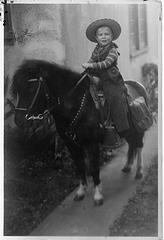

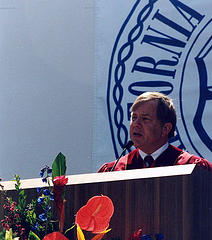
Friday, March 18, 2005
Instapundit Strikes again!
Over at Instapundit he says it all
WAR CRITICS want to mark the anniversary of the war -- there will be an "antiwar protest" at my local mall tomorrow and there are all sorts of events planned worldwide -- but a proper way of marking the date would be with a mass apology to the Iraqi people, and to George W. Bush, for taking the wrong side at a crucial moment in history.
Sackcloth, ashes, and signs reading: WE WERE WRONG, SORRY WE TRIED TO BLOCK ARAB DEMOCRACY, and WRONG ABOUT AFGHANISTAN, WRONG ABOUT IRAQ -- DON'T LISTEN TO US NEXT TIME would be appropriate.
I'm not expecting that. But at least some people are marking the occasion in suitable fashion. It may be premature to gloat, but it's not premature to point out the moral and intellectual bankruptcy of the "peace" movement, which has been apparent since the very beginning.
WAR CRITICS want to mark the anniversary of the war -- there will be an "antiwar protest" at my local mall tomorrow and there are all sorts of events planned worldwide -- but a proper way of marking the date would be with a mass apology to the Iraqi people, and to George W. Bush, for taking the wrong side at a crucial moment in history.
Sackcloth, ashes, and signs reading: WE WERE WRONG, SORRY WE TRIED TO BLOCK ARAB DEMOCRACY, and WRONG ABOUT AFGHANISTAN, WRONG ABOUT IRAQ -- DON'T LISTEN TO US NEXT TIME would be appropriate.
I'm not expecting that. But at least some people are marking the occasion in suitable fashion. It may be premature to gloat, but it's not premature to point out the moral and intellectual bankruptcy of the "peace" movement, which has been apparent since the very beginning.
Fifth Amendment Capitalists
My friend in Nashville also talked about a Studs Terkel book he is reading about hope. As I got on the plane he gave me two of the interviews from the book – John Kenneth Galbraith and Wallace Rasmussen.
Galbraith is not an economist that I ever put much stock in. One of my most polemic papers in a public finance course I did leading to my doctorate was one about the manifold falsehoods in the Affluent Society. But Galbraith used a catchy phrase in the interview – which following the (Former University of California President Jack) Peltason rule I will use once more and then take as my own. He suggested that when he was a young man there were a lot of 5th Amendment Communists. Today there are a lot of 5th Amendment Capitalists.
Rasmussen, the retired head of Beatrice foods has some interesting comments about finding honesty in corporate activity. “In God we trust, everything else we audit.”
Both interviews suggest we need to continue to work on clarity in financial reporting. Rasmussen worried in the interview that corporate managers seem only to be out for themselves – how much can I get out of it? Clearly, a misreading of Adam Smith (in reality most of the corporate leaders who adopt what they think Smith was writing about probably have never read anything but the title of An Inquiry into the Wealth of Nations and surely have never encountered the second book – the Theory of Moral Sentiments.) The Terkel book is about hope – and indeed with some additions of things like Sarbanes Oxley – there is reason for hope.
Galbraith is not an economist that I ever put much stock in. One of my most polemic papers in a public finance course I did leading to my doctorate was one about the manifold falsehoods in the Affluent Society. But Galbraith used a catchy phrase in the interview – which following the (Former University of California President Jack) Peltason rule I will use once more and then take as my own. He suggested that when he was a young man there were a lot of 5th Amendment Communists. Today there are a lot of 5th Amendment Capitalists.
Rasmussen, the retired head of Beatrice foods has some interesting comments about finding honesty in corporate activity. “In God we trust, everything else we audit.”
Both interviews suggest we need to continue to work on clarity in financial reporting. Rasmussen worried in the interview that corporate managers seem only to be out for themselves – how much can I get out of it? Clearly, a misreading of Adam Smith (in reality most of the corporate leaders who adopt what they think Smith was writing about probably have never read anything but the title of An Inquiry into the Wealth of Nations and surely have never encountered the second book – the Theory of Moral Sentiments.) The Terkel book is about hope – and indeed with some additions of things like Sarbanes Oxley – there is reason for hope.
What divides us.
Last night I was in Nashville working on a project with a vendor. One of the partners met us at the airport and took us out to dinner. The conversation soon devolved to a discussion of the current political environment.
The vendor has long experience in the politics of Tennessee. He also has long experience in higher education. Not surprisingly, he does not share my political beliefs. His last direct involvement in politics was as an unsuccessful candidate for congress – in 1974 when democrats did not lose. He is a thoughtful guy. We have compared values and grandchildren.
We started the discussion as a result of my inherent distrust of the probity of the legacy media. The conversation got around to Iraq and Social Security. In both cases he believes, I think, that a) the president has at best misrepresented his position and that b) the position he is advancing will not aid the nation. I disagree.
Our discussion about Iraq was interesting. I argued that WMDs were part of the rationale for invading Iraq but not the entire rationale and that, at the time, everyone’s intelligence suggested that Iraq held some WMDs. I also argued that the news media had substantially and conscientiously misrepresented what has happened in the middle east – often ignoring stories that would disprove their bias and emphasizing those stories that reinforced their point of view. My friend came back to two questions – first, is the effort there worth the human and economic cost – I think yes – but the discussions about the priorities could probably have been done better. I am convinced that had we waited for the Europeans to act in concert we would have never moved. But the second question was equally important. My friend lives in Brentwood, Tennessee – a place of wealth. There he argued, in his second point, that there is little, if any evidence of sacrifice. He remembers the time in WWII and soon after where the nation was pulled together by its common purpose and sacrifice. Obviously, this effort, to date, has not involved a significant percentage of the GDP that WWII did – but even with that difference, the question is worth asking.
The second area we discussed related to the President’s attempt to partially privatize Social Security. I am bothered that the President has not been more successful here. In graduate school I did a couple of major papers on alternatives for Social Security – this was a few years before the “fix” that was done in the early 1980s – I’ve always thought of that as not a fix but as a prolonging. There are three elements to Social Security – and the democrats to date have lumped them together. The first is the OA part of OASDI – that is a pensioning system that is funded with budgetary kerfluffle and not much more. A trust fund without any real trust. The second part is the SDI – survivors and disability. Fundamentally it is a mix between welfare system and social insurance system to take care of predictable but unforeseen events in life that happen. Finally, there is an old age health insurance program.
The OA part of the system is an increasingly set of false promises. It is a defined benefit program with an increasingly adverse financing mechanism. The reasons for this deterioration are IMHO twofold – demography and political grandstanding. The formulas for the program are overly generous and the coverage of workers to beneficiaries is increasingly narrow. A second problem with the existing OA system is that it is a classic Ponzi design – the early players got paid off handsomely while current and future “beneficiaries” are making an increasingly lousy investment. The president’s idea of private accounts would correct those problems – but even with those changes there probably need to be more changes. The benefits of creating private accounts are obvious – people would own an asset that could help to build both national and personal wealth.
The S,DI program is fundamentally something different. Fundamentally, decisions here are conditioned on how much we should mandate these kinds of costs. These are decisions that our political system makes pretty intelligently.
Finally there is the senior citizens health program. Here both the democrats and the republicans sold all of us a bill of goods. Sure seniors are living longer. Sure new drugs cost a lot. But is increasing an already underfunded program the way to make it better? Does the federal government have any proven expertise in managing costs?
What we came down to is a wish from both of us that the level of public discourse on issues like Iraq and Social Security would be elevated a bit. Politicians often believe they must treat us like children. In the short term that wins elections but in the long term that lowers trust in our civil and political systems. My friend commented that many of the organizations he grew up with – his church, his political party, and other things that were important to him are places where he is no longer comfortable. On that we could agree.
The vendor has long experience in the politics of Tennessee. He also has long experience in higher education. Not surprisingly, he does not share my political beliefs. His last direct involvement in politics was as an unsuccessful candidate for congress – in 1974 when democrats did not lose. He is a thoughtful guy. We have compared values and grandchildren.
We started the discussion as a result of my inherent distrust of the probity of the legacy media. The conversation got around to Iraq and Social Security. In both cases he believes, I think, that a) the president has at best misrepresented his position and that b) the position he is advancing will not aid the nation. I disagree.
Our discussion about Iraq was interesting. I argued that WMDs were part of the rationale for invading Iraq but not the entire rationale and that, at the time, everyone’s intelligence suggested that Iraq held some WMDs. I also argued that the news media had substantially and conscientiously misrepresented what has happened in the middle east – often ignoring stories that would disprove their bias and emphasizing those stories that reinforced their point of view. My friend came back to two questions – first, is the effort there worth the human and economic cost – I think yes – but the discussions about the priorities could probably have been done better. I am convinced that had we waited for the Europeans to act in concert we would have never moved. But the second question was equally important. My friend lives in Brentwood, Tennessee – a place of wealth. There he argued, in his second point, that there is little, if any evidence of sacrifice. He remembers the time in WWII and soon after where the nation was pulled together by its common purpose and sacrifice. Obviously, this effort, to date, has not involved a significant percentage of the GDP that WWII did – but even with that difference, the question is worth asking.
The second area we discussed related to the President’s attempt to partially privatize Social Security. I am bothered that the President has not been more successful here. In graduate school I did a couple of major papers on alternatives for Social Security – this was a few years before the “fix” that was done in the early 1980s – I’ve always thought of that as not a fix but as a prolonging. There are three elements to Social Security – and the democrats to date have lumped them together. The first is the OA part of OASDI – that is a pensioning system that is funded with budgetary kerfluffle and not much more. A trust fund without any real trust. The second part is the SDI – survivors and disability. Fundamentally it is a mix between welfare system and social insurance system to take care of predictable but unforeseen events in life that happen. Finally, there is an old age health insurance program.
The OA part of the system is an increasingly set of false promises. It is a defined benefit program with an increasingly adverse financing mechanism. The reasons for this deterioration are IMHO twofold – demography and political grandstanding. The formulas for the program are overly generous and the coverage of workers to beneficiaries is increasingly narrow. A second problem with the existing OA system is that it is a classic Ponzi design – the early players got paid off handsomely while current and future “beneficiaries” are making an increasingly lousy investment. The president’s idea of private accounts would correct those problems – but even with those changes there probably need to be more changes. The benefits of creating private accounts are obvious – people would own an asset that could help to build both national and personal wealth.
The S,DI program is fundamentally something different. Fundamentally, decisions here are conditioned on how much we should mandate these kinds of costs. These are decisions that our political system makes pretty intelligently.
Finally there is the senior citizens health program. Here both the democrats and the republicans sold all of us a bill of goods. Sure seniors are living longer. Sure new drugs cost a lot. But is increasing an already underfunded program the way to make it better? Does the federal government have any proven expertise in managing costs?
What we came down to is a wish from both of us that the level of public discourse on issues like Iraq and Social Security would be elevated a bit. Politicians often believe they must treat us like children. In the short term that wins elections but in the long term that lowers trust in our civil and political systems. My friend commented that many of the organizations he grew up with – his church, his political party, and other things that were important to him are places where he is no longer comfortable. On that we could agree.
Thursday, March 17, 2005
Larry Summers and academic freedom
So the Harvard faculty voted no confidence in the President. Does it show how insensitive the President is to gender issues? Does it suggest that the faculty believe in civil discourse? Does it show that the current state of the professoriate is vibrant or even mildy thoughtful? None of the above. It most of the 200 + faculty who voted against him probably had not even bothered to read the transcript of his remarks. What he said was not at all outrageous and was appropriately qualified. There are differences between men and women. They do result in differences in performance in some areas. They are not entirely uniform so that there are plenty of examples of brilliant women in math and the hard sciences. But there indeed may be some inate wiring differences that we should be aware of. Did Summers make the next connection that women should be excluded from the sciences and math? Of course not.
What the vote ultimately suggests is a much more profound point - the poverty of riches. If the richest university in the world can become embroiled in this kind of political pandering - then it may have a lot of dough but the really exciting things happening in academia may be happening somewhere else.
What the vote ultimately suggests is a much more profound point - the poverty of riches. If the richest university in the world can become embroiled in this kind of political pandering - then it may have a lot of dough but the really exciting things happening in academia may be happening somewhere else.
Wednesday, March 16, 2005
iTunes Dangers
One of the benefits and dangers of iTunes is the amount of music on the site. Buddy Guy is one of the true American innovators. He and Junior Wells (another innovator in the blues) did a series of sides that are true classics. Many of their works were covered by people like Clapton and Ray Charles and all sorts of traditional rockers. If you search the iTunes site there are lots of cuts to choose from. Once you get there it is easy to say - oh. for 99¢ that is ok - let's get that too.
But I finally found one cut that I would like to have that is not there. Wells and Junior Mance and Guy did a long cut at one point called Talking Women Obviously. It is a sly tune. The three tried to be as minimalist as possible - harmonica, guitar, and piano - but very few notes to convey a depth of feeling. I got it from a Best of Buddy Guy album but iTunes does not have it.
So on the one hand there is tons of music on the other - there is more that is not there. OK that is how markets work - but if you really like to hear masters at their craft - that cut is a must.
But I finally found one cut that I would like to have that is not there. Wells and Junior Mance and Guy did a long cut at one point called Talking Women Obviously. It is a sly tune. The three tried to be as minimalist as possible - harmonica, guitar, and piano - but very few notes to convey a depth of feeling. I got it from a Best of Buddy Guy album but iTunes does not have it.
So on the one hand there is tons of music on the other - there is more that is not there. OK that is how markets work - but if you really like to hear masters at their craft - that cut is a must.
Rambling toward corrections - 2 to be exact
In an earlier post, I argued that an earlier version of the Governor's redisticting proposal contained what I thought was a big error. The version would have given a partisan advantage in the structure of how voters were placed into districts - I commented that was a bad idea - but the proposal as it has come out does not have that twist. Regardless, the new one allows, as Tony Quinn suggested in a Bee Editorial on Sunday, for a group of retired judges of the stature of some of the bright lights that have given us ideas from the 9th Circus. (Indeed, it should not be referred to as a circuit - most of their synapses no longer connect) As noted in the earlier post, the idea of creating a partisan neutral redistricting plan is a good one.
#2 - There were press reports that Carly Fiorinna was about to be appointed as head of the World Bank. I speculated with her record at HP - that might not be a bad idea - after all she successfully reduced HPs capital by about 30%. But it turns out that POTUS 43 has nominated Paul Wolfowitz. The neo-con libs love to hate. He is a bright guy and he might be able to do something - to the extent that the World Bank should be encouraged.
#2 - There were press reports that Carly Fiorinna was about to be appointed as head of the World Bank. I speculated with her record at HP - that might not be a bad idea - after all she successfully reduced HPs capital by about 30%. But it turns out that POTUS 43 has nominated Paul Wolfowitz. The neo-con libs love to hate. He is a bright guy and he might be able to do something - to the extent that the World Bank should be encouraged.
Tuesday, March 15, 2005
Hardball and Sense of Message
Last evening I was a part of the audience when Hardball came to Stanford University and Chris Matthews took on the Governor of California. The score at the end of the hour, to the extent that anyone was keeping it was Arnold 1, Chris 0. Possibly the score was even wider than that.
I have worked around politicians for most of my career. In an opening question, Arnold was asked what he thought about gay marriage. He did an elegant dance without answering the question. Asked if he supported gay marriage - he said he did if the people did or the courts - yes he did support domestic partnerships but the voters should decide but they had decided on a previous initiative. And so he danced around this without ever offering something that any political opponent could nail him on. But then in a series of questions the Gov was able to get his message out clearly. Is he against nurses or teachers - no he is against unions.
There was one thing that bothered me. The Governor is remarkably flexible on who should make the decisions. The voters, OK. The court, OK. If we live in a Constitutional system, shouldn't there be some types of limits on how much the courts can do? Are there some questions that are outside of the realm of the courts. Justice Scalia in a speech to the Wilson Center took a slightly different tack when he suggested that the contract of the Constitution is just that - not moveable, not living. If the people want to amend the contract either through their elected representatives or through the ballot box, they can. But the job of justices is to look at the contract and see if an issue fits within those bounds. That view, while many would think it narrow, seems to be a better one. Were one to take the more living view of the Constitution, then why do you need yet another group (unelected) to make decisions?
The Governor's four issues - redistricting, budget control, pension reform, and education reform - got explained clearly and starkly. Matthews tried to bring all of the things you would expect him to bring up with a GOP governor. Special interests. Out sourcing. Girlie men (actually asked by a student). Even Steroids - you name it. But in each case he came back to the message - are you against teachers or nurses or seniors, asked Matthews? The Gov replied no teachers and nurses unions. He created a bunch of excellent soundbites that could be used in lots of ways.
He retold the story of passing through Soviet checkpoints in one of the breaks - and it was as compelling as it had been in the GOP convention.
He was asked a question I suspect he gets a lot - the inevitable question that has "Hail to the Chief" somewhere in the body - and unlike most of his recent predecessors - he did not look for ruffles and flourishes but rather completing his job he holds now. That response was refreshing. With the exception of George Deukmejian - the current incumbent is the only one in a long time not succumbing to the allure of Washington.
This was a worthwhile hour to watch a master of the political craft, even one who stoutly declines to be called a politician. If it is rebroadcast - it is worth seeing.
I have worked around politicians for most of my career. In an opening question, Arnold was asked what he thought about gay marriage. He did an elegant dance without answering the question. Asked if he supported gay marriage - he said he did if the people did or the courts - yes he did support domestic partnerships but the voters should decide but they had decided on a previous initiative. And so he danced around this without ever offering something that any political opponent could nail him on. But then in a series of questions the Gov was able to get his message out clearly. Is he against nurses or teachers - no he is against unions.
There was one thing that bothered me. The Governor is remarkably flexible on who should make the decisions. The voters, OK. The court, OK. If we live in a Constitutional system, shouldn't there be some types of limits on how much the courts can do? Are there some questions that are outside of the realm of the courts. Justice Scalia in a speech to the Wilson Center took a slightly different tack when he suggested that the contract of the Constitution is just that - not moveable, not living. If the people want to amend the contract either through their elected representatives or through the ballot box, they can. But the job of justices is to look at the contract and see if an issue fits within those bounds. That view, while many would think it narrow, seems to be a better one. Were one to take the more living view of the Constitution, then why do you need yet another group (unelected) to make decisions?
The Governor's four issues - redistricting, budget control, pension reform, and education reform - got explained clearly and starkly. Matthews tried to bring all of the things you would expect him to bring up with a GOP governor. Special interests. Out sourcing. Girlie men (actually asked by a student). Even Steroids - you name it. But in each case he came back to the message - are you against teachers or nurses or seniors, asked Matthews? The Gov replied no teachers and nurses unions. He created a bunch of excellent soundbites that could be used in lots of ways.
He retold the story of passing through Soviet checkpoints in one of the breaks - and it was as compelling as it had been in the GOP convention.
He was asked a question I suspect he gets a lot - the inevitable question that has "Hail to the Chief" somewhere in the body - and unlike most of his recent predecessors - he did not look for ruffles and flourishes but rather completing his job he holds now. That response was refreshing. With the exception of George Deukmejian - the current incumbent is the only one in a long time not succumbing to the allure of Washington.
This was a worthwhile hour to watch a master of the political craft, even one who stoutly declines to be called a politician. If it is rebroadcast - it is worth seeing.
Friday, March 11, 2005
Ward Churchill and Academic Freedom
The newswires have begun to suggest that Ward Churchill is going to leave UC Boulder with a bunch of dough in his pocket. There is some argument that the money will come from private funds but even that should raise eyebrows.
Academic freedom is not without some reasonable limits. We should not go back to the era of Levering oaths. But there should always be an out for a university to adjudge a person like Churchill as no longer being eligible to stay in the club. His remarks about "little Eichmans" were offensive - but they should be protected to a point. But his inflated claims about scholarship (his educational record is suspect.
The CU academic handbook states "With the conferral of tenure, the faculty member holds a continuing appointment, and the burden shifts to the institution to show why the faculty member should be dismissed. Tenure presumes the continuing fitness of, and need for, the faculty member. The presumption is rebuttable, but only by the administration's demonstrating in a hearing of record before a body of academic peers, as required by the university's and Board of Regents' official policies, that adequate cause exists for taking action against the faculty member. " That is a tough standard, as it should be. But it should not prevent the administration or even the faculty from reexamining the performance and even the decision about tenure.
In this case Churchill, without a legitimate terminal degree seems to have been fast tracked to tenure. As the Chanellor has suggested a panel will be convened to "determine whether Professor Churchill may have overstepped his bounds as a faculty member, showing cause for dismissal as outlined in the Laws of the Regents. Two primary questions will be examined in this review: (1) Does Professor Churchill's conduct, including his speech, provide any grounds for dismissal for cause, as described in the Regents' Laws? And (2) if so, is this conduct or speech protected by the First Amendment against University action? " But the real question should go a bit deeper.
Clearly Mr. Churchill, a graduate (according to his webpage) of Sangamon State (on Churchill's page he even spells the name of the place wrong) - now the University of Illinois at Springfield has a half a dozen publications from mediocre presses. His last listed was in 1996. What a productive scholar.
IMHO the group making the review should go back and look at the tenure decision - was it legitimate or was it a fraud. Did Churchill obtain his position by claiming Native American heritage? If he did the decision should probably have been rescinded at the point that people began to see his true background and skills. It looks a lot like CU hired him to fill a quota. The people of Colorado and the donors to the university should not be forced to pay off a fraud or to continue to pay a fraud.
His scholarly work from all appearances seems to be shoddy, and his credentials are mediocre. Both of those factors should go into any review of whether or not there are grounds for revoking his tenure. The CU site gives a bit more creedence to First Amendment rights than I might - but that is a bit less dodgy in a public institution - free (political) speech is generally protected in a public instiution regardless of tenure.
Academic freedom is not without some reasonable limits. We should not go back to the era of Levering oaths. But there should always be an out for a university to adjudge a person like Churchill as no longer being eligible to stay in the club. His remarks about "little Eichmans" were offensive - but they should be protected to a point. But his inflated claims about scholarship (his educational record is suspect.
The CU academic handbook states "With the conferral of tenure, the faculty member holds a continuing appointment, and the burden shifts to the institution to show why the faculty member should be dismissed. Tenure presumes the continuing fitness of, and need for, the faculty member. The presumption is rebuttable, but only by the administration's demonstrating in a hearing of record before a body of academic peers, as required by the university's and Board of Regents' official policies, that adequate cause exists for taking action against the faculty member. " That is a tough standard, as it should be. But it should not prevent the administration or even the faculty from reexamining the performance and even the decision about tenure.
In this case Churchill, without a legitimate terminal degree seems to have been fast tracked to tenure. As the Chanellor has suggested a panel will be convened to "determine whether Professor Churchill may have overstepped his bounds as a faculty member, showing cause for dismissal as outlined in the Laws of the Regents. Two primary questions will be examined in this review: (1) Does Professor Churchill's conduct, including his speech, provide any grounds for dismissal for cause, as described in the Regents' Laws? And (2) if so, is this conduct or speech protected by the First Amendment against University action? " But the real question should go a bit deeper.
Clearly Mr. Churchill, a graduate (according to his webpage) of Sangamon State (on Churchill's page he even spells the name of the place wrong) - now the University of Illinois at Springfield has a half a dozen publications from mediocre presses. His last listed was in 1996. What a productive scholar.
IMHO the group making the review should go back and look at the tenure decision - was it legitimate or was it a fraud. Did Churchill obtain his position by claiming Native American heritage? If he did the decision should probably have been rescinded at the point that people began to see his true background and skills. It looks a lot like CU hired him to fill a quota. The people of Colorado and the donors to the university should not be forced to pay off a fraud or to continue to pay a fraud.
His scholarly work from all appearances seems to be shoddy, and his credentials are mediocre. Both of those factors should go into any review of whether or not there are grounds for revoking his tenure. The CU site gives a bit more creedence to First Amendment rights than I might - but that is a bit less dodgy in a public institution - free (political) speech is generally protected in a public instiution regardless of tenure.
The OFPG
I have a group of friends who meet periodically to discuss politics. The original members all had this in common - they once ran campaigns, they all have an advanced degree and they have agreed to listen to each others. OFPG stands for the Old Farts Political Group. The group is a diverse one. It includes people who have worked for conservatives and liberals. It is a good place to understand what is happening in California and National politics.
Today we discussed two issues - the mayor's race in LA - where the city seems likely to elect its first Latino mayor since the 19th century. We had a couple of good rememberances of Kennth Hahn - the father of the current mayor who stayed in the position of county supervisor for many decades. The dad began his political career in the Western part of the city but stayed through it long after the neighborhood had gone from white to black. But the son - who looks like a loser in this race - lacks a lot of the skills of the father.
We also discussed whether the Governor's strategy made any political sense. There could be a couple of ways to deal with the issues the Governor chooses to pursue. One could have gone to the legislature - lost the issues and then drop them into the initiative process. The second alternative would be to do what the Gov has done. He drafted a series of proposals - many of which could have benefitted from a bit more vetting - for example the pension proposal seems to cut out widows and orphans of officers who died in the line of duty. The redistricting initiative seems to allow the appointment of a particular brand of retired judge - for example like the dunce who found that God does not belong in the pledge.
The third alternative seems much better - create a citizens commission - do some public meetings and discussion of each of the issues then vet some proposals and put em on the ballot. But it seems that some of his advisors are more interested in reaping the rewards of running a campaign than in achieving long term changes in the system.
There is a lot of grumpiness about the political system in California. Pick almost any area and you will find two things - discontent with the present a and a series of major issues where the public would want the appearance of positive change. Getting things right would seem to be better than getting things active.
Today we discussed two issues - the mayor's race in LA - where the city seems likely to elect its first Latino mayor since the 19th century. We had a couple of good rememberances of Kennth Hahn - the father of the current mayor who stayed in the position of county supervisor for many decades. The dad began his political career in the Western part of the city but stayed through it long after the neighborhood had gone from white to black. But the son - who looks like a loser in this race - lacks a lot of the skills of the father.
We also discussed whether the Governor's strategy made any political sense. There could be a couple of ways to deal with the issues the Governor chooses to pursue. One could have gone to the legislature - lost the issues and then drop them into the initiative process. The second alternative would be to do what the Gov has done. He drafted a series of proposals - many of which could have benefitted from a bit more vetting - for example the pension proposal seems to cut out widows and orphans of officers who died in the line of duty. The redistricting initiative seems to allow the appointment of a particular brand of retired judge - for example like the dunce who found that God does not belong in the pledge.
The third alternative seems much better - create a citizens commission - do some public meetings and discussion of each of the issues then vet some proposals and put em on the ballot. But it seems that some of his advisors are more interested in reaping the rewards of running a campaign than in achieving long term changes in the system.
There is a lot of grumpiness about the political system in California. Pick almost any area and you will find two things - discontent with the present a and a series of major issues where the public would want the appearance of positive change. Getting things right would seem to be better than getting things active.
Thursday, March 10, 2005
Is political capital something to spend?
One of the big discussions in Sacramento is whether the Governor has a set of ideas that will make sense to the voters or whether he has bit off more than he can chew. In creating his initiatives he has taken on a number of important interest groups - including the nurses (on mandated staffing ratios), teachers (on merit pay and an appropriate definition of the school funding guarantee - Proposition 98), public employees in general (on significantly generous pension policies) and even the culture of spending/budgeting in the capitol (on creating an expenditure limitation stronger than the one adopted last year) and then finally the political establishment (on how districts are drawn for the legislature and other district based offices).
Conventional wisdom suggests that the combination of forces will ultimately become too much to bear for him and that he will be unsuccessful. You can't take on all of those forces - they call the shots.
But conventional wisdom, as it often is in politics, may be wrong. The combined resentments of voters may be enough to overturn conventional wisdom. Most, if not all voters, do not have a defined benefit pension that allows you to retire with benefits for life. Most parents and even general citizens think the schools have not made enough progress - even though the schools are dealing with a diverse crowd of students. Most drivers are grumpy that their transportation system in the state is increasingly disfunctional - money has been diverted for several years and yet here we have thousands of state engineers. Finally, most observers - whatever their stripe are skeptical that we've got the brightest and the best representing us - although indeed the legislature is in reality often a reflection of the society we live in.
In the end a lot of these issues will come down to who do you trust. And in that category the interests, no matter how special, will have a hard time appealing to the average voter. The Governor moved voters in a short time on a couple of issues in the last election - and there is little indication that he has lost his touch in this area.
Ultimately, this set of issues is about how resources are allocated. The state process for making choices is ponderous and often ignores alternatives that are common in other places - mandated staffing ratios or assuring a standard of care, defined benefit or defined contribution plans, figuring out a logical way to measure performance in schools and even establishing a procedure for choosing our representatives where those directly affected do not have a role in determining who will be elected - are all examples of resource allocation - in essence of the state's political capital. And in each the public perception and the political establishment's perception may be substantially different.
Conventional wisdom suggests that the combination of forces will ultimately become too much to bear for him and that he will be unsuccessful. You can't take on all of those forces - they call the shots.
But conventional wisdom, as it often is in politics, may be wrong. The combined resentments of voters may be enough to overturn conventional wisdom. Most, if not all voters, do not have a defined benefit pension that allows you to retire with benefits for life. Most parents and even general citizens think the schools have not made enough progress - even though the schools are dealing with a diverse crowd of students. Most drivers are grumpy that their transportation system in the state is increasingly disfunctional - money has been diverted for several years and yet here we have thousands of state engineers. Finally, most observers - whatever their stripe are skeptical that we've got the brightest and the best representing us - although indeed the legislature is in reality often a reflection of the society we live in.
In the end a lot of these issues will come down to who do you trust. And in that category the interests, no matter how special, will have a hard time appealing to the average voter. The Governor moved voters in a short time on a couple of issues in the last election - and there is little indication that he has lost his touch in this area.
Ultimately, this set of issues is about how resources are allocated. The state process for making choices is ponderous and often ignores alternatives that are common in other places - mandated staffing ratios or assuring a standard of care, defined benefit or defined contribution plans, figuring out a logical way to measure performance in schools and even establishing a procedure for choosing our representatives where those directly affected do not have a role in determining who will be elected - are all examples of resource allocation - in essence of the state's political capital. And in each the public perception and the political establishment's perception may be substantially different.
Wednesday, March 09, 2005
Carly to the World Bank
Carly is being considered for a job in the World Bank - presumably not as a teller. I wonder where the story came from. Should it become true we might want to reconsider whether the World Bank should continue. Come to think of it, that is not a bad idea.
Tuesday, March 08, 2005
The Three Rules of Legislative Practice
About five years ago I began to formulate the three rules of legislative practice. For me they are about as complete as it is possible to be. So I thought you might enjoy them. They are a) the Lord Palmerston Rule, b) the Otto von Bismark Rule, and c) the Scarlett O' Hara Rule.
Lord Palmerston - the 19th Century British political person - who worked in and around Disraeli - said Great Britain has "no permanent friends, no permanent enemies, only permanent interests." Indeed, the legislative process requires one to be rigorous about knowing what is important. That means ignoring the fact that someone is almost consistently on the other side of things you care about. Treat people well and it will be returned.
Otto von Bismark - Bismark, the founder of the modern social security system (now there's a claim to fame) once said "Politics is the art of the possible." One of the defects of many political thinkers is that they ignore Bismark. What seems the limits of today's system can be substantially redefined almost overnight. Just ask Howard Dean. Or Assad. Or Gray Davis. This is not a suggestion to go chasing after foolish ideas - but it is also foolish to define the terms in conventional wisdom, exclusively.
Scarlett O'Hara - her insight comes from her great line in Gone with the Wind - she said "Tomorrow is another day." There is a reason it is called the legislative process and not the legislative event. The best players look for the long term and remember the first two rules. Just like Allen Funt - some time, some place, you may be surprised at the possibilities if you are on the lookout for them. But if you play each issue like a death struggle, you will eventually die.
Lord Palmerston - the 19th Century British political person - who worked in and around Disraeli - said Great Britain has "no permanent friends, no permanent enemies, only permanent interests." Indeed, the legislative process requires one to be rigorous about knowing what is important. That means ignoring the fact that someone is almost consistently on the other side of things you care about. Treat people well and it will be returned.
Otto von Bismark - Bismark, the founder of the modern social security system (now there's a claim to fame) once said "Politics is the art of the possible." One of the defects of many political thinkers is that they ignore Bismark. What seems the limits of today's system can be substantially redefined almost overnight. Just ask Howard Dean. Or Assad. Or Gray Davis. This is not a suggestion to go chasing after foolish ideas - but it is also foolish to define the terms in conventional wisdom, exclusively.
Scarlett O'Hara - her insight comes from her great line in Gone with the Wind - she said "Tomorrow is another day." There is a reason it is called the legislative process and not the legislative event. The best players look for the long term and remember the first two rules. Just like Allen Funt - some time, some place, you may be surprised at the possibilities if you are on the lookout for them. But if you play each issue like a death struggle, you will eventually die.
Spring Days
For the last 35 years I have worked in and around the political process starting with the Nixon White House (twice) and the US Senate and the Congress then the California legislature. For the last 30 years, as of March 1, I have worked for the independent colleges of California. The legislative process can be a lot of things. It can be slow, maddening, cruel, fun, exuberant, bizarre, elevating and depressing - in short everything human experience can bring. But one day each Spring, there comes a time when the seasons take over. Like the first day of Baseball (April 7 for the Rivercats).
Today was such a day. For the last year or so I have worked on two somewhat related issues - caused in part by who I represent and in part by what I represent. I will not go into those issues now. But today I started with a key staffer in the Assembly and a senior Senator - talking about both issues. What I found was that the tales of immediate collapse and degredation, spread by one of my antagonists in the issues, were, as I suspected complete fabrications. In both cases these key players argued reasonableness and thought - exactly what the process should be.
It wasn't the weather - but it sure helped.
Today was such a day. For the last year or so I have worked on two somewhat related issues - caused in part by who I represent and in part by what I represent. I will not go into those issues now. But today I started with a key staffer in the Assembly and a senior Senator - talking about both issues. What I found was that the tales of immediate collapse and degredation, spread by one of my antagonists in the issues, were, as I suspected complete fabrications. In both cases these key players argued reasonableness and thought - exactly what the process should be.
It wasn't the weather - but it sure helped.
Rethinking an earlier post
In a post on February 24, I speculated whether the WSJ as a closed network was limiting its effectiveness. (See the WSJ in February archives). The original post was based on an article in WIRED. This morning I was updating some of my settings for the WSJ and think the original direction may have been wrong.
As you browse the electronic edition - there are a number of direct feeds of the WSJ to subscribers and a more limited number for non-subscribers. Opinon - interestingly enough - goes to both. The feeds can go to a desktop, to an RSS feed, or a mobile device. Thus, for the people who actually consume the news that the WSJ offers the ultimate network is created.
That suggests the ultimate individualized market, which is what Kevin Kelly and others have been writing about for years. Does it work in the news business like it does in other commodities? Why would it not?
As you browse the electronic edition - there are a number of direct feeds of the WSJ to subscribers and a more limited number for non-subscribers. Opinon - interestingly enough - goes to both. The feeds can go to a desktop, to an RSS feed, or a mobile device. Thus, for the people who actually consume the news that the WSJ offers the ultimate network is created.
That suggests the ultimate individualized market, which is what Kevin Kelly and others have been writing about for years. Does it work in the news business like it does in other commodities? Why would it not?
Monday, March 07, 2005
Ethics - Public and Private
This evening as I was driving back from the airport, I was listening to Dennis Prager - who is often a thoughtful guy. But tonight he missed. He was upset that Boeing had fired their CEO - Harry Stonecipher. He kept referring to "corporate fascists."
Stonecipher and a senior executive were having a consensual affair and the board disapproved. Prager was bothered that a) the board took the action and b) the unnamed female was not also terminated. As someone who has served on several boards I understood the action immediately. To understand the situation one needs to understand at least three things. First, Boeing's previous CEO (Phil Condit) was terminated, in part, for some ethical issues. Second, there is a difference between the CEO and every other position in a company - the CEO to be successful needs to operate on a higher level. Third, transparency demands some things of companies that were not demanded even a couple of years ago - and that is ultimately positive.
Let me explain. First, Boeing's last CEO was terminated and two others were sent to prison for some serious ethical lapses less than 18 months ago. Image here is important and the board understood that. For a company that operates on many public contracts, this kind of breach needed to be responded to clearly and without equivocation. Stonecipher was hired as the company's chief ethics enforcer. He admitted he had screwed up. But the board had to take action. Not acting would have further jeopardized the fortunes of the company.
Second, the CEO position requires different standards of behavior. Prager decried that a CEO whose success was reasonably clear (stock price and profits up) could be fired for private (and consensual) acts. Unfortunately the CEO needs to operate in a way that does not call into question either his company or his team. Indeed, the female did not report directly to him - but his relationship with any senior employee brought into question his judgment in other areas. My suspicion is that if this had been between the CEO and a woman outside the company the board would not have acted. But this kind of breach was just too much to bear.
Third, the examples of Adelphia, Enron, and a raft of others has brought us to higher standards of disclosure and to establishing some penalties for behavior which might have been accepted in earlier times. Last Fall I attended a Price Waterhouse Coopers seminar for board members of public and private company audit committees. There were lots of discussions about the higher standards of disclosure required under law (Sarbanes Oxley or SOX or SARBOX for example) - but even more important was the standard for key personnel to operate on a higher ethical standard. There is still a lot of confusion about how to work in the new world - reporting is perhaps too onerous for the cost benefit of what society gets. But remember the example of Benjamin Graham - who began to call for higher levels of disclosure while still at Columbia in the 1920s and 1930s. Those accounting standards - which ultimately evolved with the development of standards boards like FASB and government agencies like the SEC - encouraged the democratization of investing. Firing a CEO who has such poor judgement as Stonecipher seems to have had is not "corporate fascism" it is more a recognition of current standards of behavior and sound judgment by a board.
The oddest thing about this affair (pun intended) is that it seems that a higher standard was applied to Stonecipher than to Clinton. But what else is new. Think of all the laws that Congress exempts itself from.
Stonecipher and a senior executive were having a consensual affair and the board disapproved. Prager was bothered that a) the board took the action and b) the unnamed female was not also terminated. As someone who has served on several boards I understood the action immediately. To understand the situation one needs to understand at least three things. First, Boeing's previous CEO (Phil Condit) was terminated, in part, for some ethical issues. Second, there is a difference between the CEO and every other position in a company - the CEO to be successful needs to operate on a higher level. Third, transparency demands some things of companies that were not demanded even a couple of years ago - and that is ultimately positive.
Let me explain. First, Boeing's last CEO was terminated and two others were sent to prison for some serious ethical lapses less than 18 months ago. Image here is important and the board understood that. For a company that operates on many public contracts, this kind of breach needed to be responded to clearly and without equivocation. Stonecipher was hired as the company's chief ethics enforcer. He admitted he had screwed up. But the board had to take action. Not acting would have further jeopardized the fortunes of the company.
Second, the CEO position requires different standards of behavior. Prager decried that a CEO whose success was reasonably clear (stock price and profits up) could be fired for private (and consensual) acts. Unfortunately the CEO needs to operate in a way that does not call into question either his company or his team. Indeed, the female did not report directly to him - but his relationship with any senior employee brought into question his judgment in other areas. My suspicion is that if this had been between the CEO and a woman outside the company the board would not have acted. But this kind of breach was just too much to bear.
Third, the examples of Adelphia, Enron, and a raft of others has brought us to higher standards of disclosure and to establishing some penalties for behavior which might have been accepted in earlier times. Last Fall I attended a Price Waterhouse Coopers seminar for board members of public and private company audit committees. There were lots of discussions about the higher standards of disclosure required under law (Sarbanes Oxley or SOX or SARBOX for example) - but even more important was the standard for key personnel to operate on a higher ethical standard. There is still a lot of confusion about how to work in the new world - reporting is perhaps too onerous for the cost benefit of what society gets. But remember the example of Benjamin Graham - who began to call for higher levels of disclosure while still at Columbia in the 1920s and 1930s. Those accounting standards - which ultimately evolved with the development of standards boards like FASB and government agencies like the SEC - encouraged the democratization of investing. Firing a CEO who has such poor judgement as Stonecipher seems to have had is not "corporate fascism" it is more a recognition of current standards of behavior and sound judgment by a board.
The oddest thing about this affair (pun intended) is that it seems that a higher standard was applied to Stonecipher than to Clinton. But what else is new. Think of all the laws that Congress exempts itself from.
Saturday, March 05, 2005
The Shuffle
Since it first came out I have had an iPod. I started with a 10GIG one and now use that for books on tape when I am working out. I then moved to a 40 GIG one which I have used for about the last year - I have yet to fill it up. But when the shuffle came out in January, I bought one just to see how it works. Indeed, if you think of it as a 1 GIG pen drive, it is reasonably priced even if it did not hold music.
The shuffle has two modes - shuffle and straight through. I created a file in Itunes called Shuffle which I use to load it - I have about 120 songs on it - which means I could hold a lot more. The shuffle feature mixes and matches all of the songs in the file - which means for me you can switch between bluegrass and rock and roll and opera. That creates some interesting mixes but when you are traveling it is wonderful to just sit and listen. It has helped redefine how I listen to music. Plus the compact size is great to just throw in a pocket.
iTunes has a lot of the characteristics of Tivo - so the rips that one can create are unique and the combinations are almost limitless. The Shuffle allows you to do that on a smaller scale. But all of this can be done almost on the fly - that flexibility is great.
There are a couple of problems with the whole iTunes thing. First, is disk size . If you have, as I do, more than 3000 legal songs - that eats about 12 GIG on my laptop's hard disk. One solution would be to move all of the iTunes files to another computer - like a mini. And I may do that. But with an 80 gig drive on my laptop - between iTunes and iPhoto I am limited on the other things I can keep on my laptop. The second problem is the addictive nature of iTunes Music Store. When my wife and I saw Ray - I immediately went home and searched for Ray Charles and then downloaded a bunch of his songs. I play them a lot (he was an innovative musician in many genres). But that can become expensive if you do not watch yourself. The library keeps getting more and more interesting.
These are consumerist dilemmas but ultimately good ones to have.
The shuffle has two modes - shuffle and straight through. I created a file in Itunes called Shuffle which I use to load it - I have about 120 songs on it - which means I could hold a lot more. The shuffle feature mixes and matches all of the songs in the file - which means for me you can switch between bluegrass and rock and roll and opera. That creates some interesting mixes but when you are traveling it is wonderful to just sit and listen. It has helped redefine how I listen to music. Plus the compact size is great to just throw in a pocket.
iTunes has a lot of the characteristics of Tivo - so the rips that one can create are unique and the combinations are almost limitless. The Shuffle allows you to do that on a smaller scale. But all of this can be done almost on the fly - that flexibility is great.
There are a couple of problems with the whole iTunes thing. First, is disk size . If you have, as I do, more than 3000 legal songs - that eats about 12 GIG on my laptop's hard disk. One solution would be to move all of the iTunes files to another computer - like a mini. And I may do that. But with an 80 gig drive on my laptop - between iTunes and iPhoto I am limited on the other things I can keep on my laptop. The second problem is the addictive nature of iTunes Music Store. When my wife and I saw Ray - I immediately went home and searched for Ray Charles and then downloaded a bunch of his songs. I play them a lot (he was an innovative musician in many genres). But that can become expensive if you do not watch yourself. The library keeps getting more and more interesting.
These are consumerist dilemmas but ultimately good ones to have.
Thursday, March 03, 2005
The H in HP is not Hungarian
Technology Review is a wonderful magazine produced at MIT which includes a lot of timely and interesting articles on a raft of technology based subjects. In the electronic edition of TR there was a post today by a former HP engineer who was an emigre from Hungary. He describes in great detail how poorly Carly Fiorina understood how a technology company advances. The engineer described HP as a place that examplified "a spirit of adventure and a belief in unlimited possibilities." But with the ascension of Carly that spirit was sapped. He suggests that the new management team was scared of nervous investors - indeed that was probably true - but as one who invested in HP - I was nervous because the new management team had little or no understanding of the things that made HP a great company.
Interestingly enough I was with the president of the University of California on Tuesday evening and he (who spent most of his career at Bell Labs) lamented the demise of that outfit. In both cases the researchers were allowed to do what if problems rather than solving for the mundane. I wonder what our long term prospects for continued advances are if we do not adequately appreciate the people who can ask - what if.
The address for the article titled Carly's Way is http://www.technologyreview.com/articles/05/03/wo/wo_delio030405.asp?trk=nl - but if you have any interest in technology issues you should subscribe to the magazine.
Interestingly enough I was with the president of the University of California on Tuesday evening and he (who spent most of his career at Bell Labs) lamented the demise of that outfit. In both cases the researchers were allowed to do what if problems rather than solving for the mundane. I wonder what our long term prospects for continued advances are if we do not adequately appreciate the people who can ask - what if.
The address for the article titled Carly's Way is http://www.technologyreview.com/articles/05/03/wo/wo_delio030405.asp?trk=nl - but if you have any interest in technology issues you should subscribe to the magazine.
Wednesday, March 02, 2005
How not to succeed in the new era
The RIAA (Recording Industry Association of America) is at it again. This time in a series of suits designed more for harassment than any legitimate purpose (what else is new) they have sued a dead person, several people who haven't a clue about file sharing and a bunch of universities - who seem to be included because they have the audacity of maintaining a network for their students and faculty.
It should be a requirement that any member of the RIAA wear wooden shoes because these yahoos are really like their counterparts over several centuries who are not bright enough to look to the future. The claim made by the RIAA is that millions (billions, trillions) of dollars are being lost to illegal downloads of music. The data does not support the contention but that has not seemed to stop these buzzards.
Professor Lessig at Stanford, who has done some of the most interesting thinking about the relationship of technology to copyright - tells the story in one of his books about the first videotape producers who came to Disney and said - we have this great idea for a new technology. The Disney people were having none of it. Ultimately, the increase in market created by these new forms of home viewing of movies have transformed the industry and enlarged profits.
I have about 3000 songs on my laptop - to help fill my iPod - and all of them are legal - either from my own collection of from the iTunes site. Indeed, at one point I used Napster and Limewire to search for music which was no longer available. But I soon discovered that the free sites had a lot of problems. They rarely offered the full cut of a song. Quality was uneven. Connections were also uneven. The iTunes alternative became a quick and wonderful alternative to the lousy quality of the alternative services.
Markets will always figure out a way to price things reasonably. Were the RIAA even minimally adept they would try to lead the trend in the direction that would be helpful to artists and consumers. But of course that is not who they really care about.
It should be a requirement that any member of the RIAA wear wooden shoes because these yahoos are really like their counterparts over several centuries who are not bright enough to look to the future. The claim made by the RIAA is that millions (billions, trillions) of dollars are being lost to illegal downloads of music. The data does not support the contention but that has not seemed to stop these buzzards.
Professor Lessig at Stanford, who has done some of the most interesting thinking about the relationship of technology to copyright - tells the story in one of his books about the first videotape producers who came to Disney and said - we have this great idea for a new technology. The Disney people were having none of it. Ultimately, the increase in market created by these new forms of home viewing of movies have transformed the industry and enlarged profits.
I have about 3000 songs on my laptop - to help fill my iPod - and all of them are legal - either from my own collection of from the iTunes site. Indeed, at one point I used Napster and Limewire to search for music which was no longer available. But I soon discovered that the free sites had a lot of problems. They rarely offered the full cut of a song. Quality was uneven. Connections were also uneven. The iTunes alternative became a quick and wonderful alternative to the lousy quality of the alternative services.
Markets will always figure out a way to price things reasonably. Were the RIAA even minimally adept they would try to lead the trend in the direction that would be helpful to artists and consumers. But of course that is not who they really care about.
Subscribe to:
Posts (Atom)

 Posts
Posts

